





A central tenet of abdominal wall repair is the concept of a tension-free closure, but new research showed no association between myofascial tension and negative short-term postoperative outcomes.
In some very large ventral hernias, a significant amount of tension may be required to re-approximate the fascia at the midline and reestablish the linea alba, even after a posterior component separation and transversus abdominis release (TAR). “But little is known about the role of compliance in the physiology of the abdominal wall and the peritoneal cavity, so that became the focus of our investigation,” said Ryan C. Ellis, a general surgery resident with the Cleveland Clinic Foundation, in Ohio.
To assess the role between tension and adverse short-term postoperative outcomes, Dr. Ellis and his colleagues conducted a post hoc analysis of an observational cohort study on 100 patients who underwent posterior component separation followed by TAR between January and July 2022.
For the initial study, the researchers teamed up with Cleveland Clinic’s Mechanical Prototyping Core staff, who developed and created an intraoperative sterilizable reusable tensiometer, “essentially, a hook attached to a handle with a metal spring calibrated to a scale to read pounds,” Dr. Ellis said.
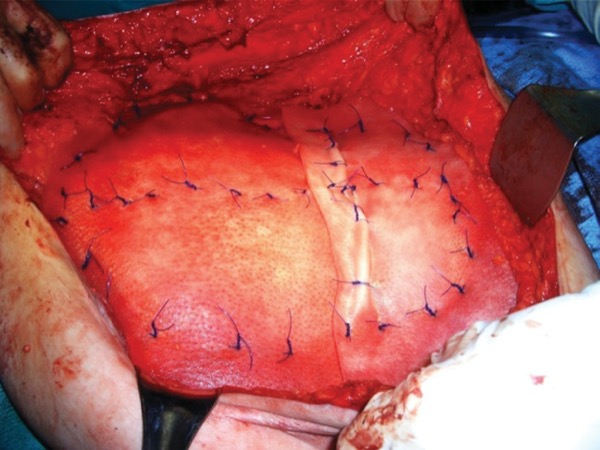
They measured baseline tension, the change in tension from baseline to the abdominal closure and tension at the closure. The mean baseline tension was 6.78 pounds on either side of the abdomen, for a total of 13.56 pounds, and the mean tension after posterior component separation and TAR was 3.12 pounds on either side, with 6.24 pounds total.
For the post hoc analysis, Dr. Ellis and his colleagues included all 100 patients from the original trial. The patients were 52% male, with a median age of 60 years and median body mass index of 32 kg/m2. The most common ASA classification was III, the most common CDC wound class was I and 55% had recurrent incisional hernias with a median hernia width of 13 cm.
The most common negative outcome or complication, seen in 27% of patients, was ileus, followed by surgical site infection in 13% of patients, readmission in 10%, surgical site occurrence in 8% and bleeding requiring transfusion in 7%. Three cases of respiratory failure required intubation, and there were no strokes, myocardial infarctions or renal failures.
Dr. Ellis and his colleagues conducted a multivariable regression analysis on the five most common adverse outcomes looking for an association with those outcomes and fascial tension. “That analysis found baseline tension, change in tension and tension at closure not associated with SSIs, SSOs, readmission, ileus or bleeding requiring transfusion,” Dr. Ellis said.
He shared the study as an abstract at the 2023 annual meeting of the American Hernia Society.
Eric Pauli, MD, the David L. Nahrwold Professor of Surgery and chief of the Division of Minimally Invasive and Bariatric Surgery at Penn State Health Milton S. Hershey Medical Center, in Hershey, Pa., told General Surgery News that he doesn’t believe the study is practice-changing, but it resolves some of the hernia repair dogma with which surgeons generally disagree.
“I think the concept of a tension-free repair is and always has been a misnomer. When the term ‘tension-free repair’ was developed, I think what they were trying to describe is a repair that has less tension than if you were to just suture fascia back together without doing some other maneuver. What they were probably trying to describe was a physiologically tensioned repair.”
Dr. Pauli noted that in its native state, the abdominal wall has tension across it to maintain the physiologic levels of force required to maintain posture and perform basic functions—that is, movement needs muscular tension.
“When we think about a good hernia repair, it should re-create normal levels of tension across the abdominal wall. What we don’t know is how much tension is too much on a repair and whether that tension results in increased failures.”
He further observed that the main purpose of a retromuscular hernia repair is not specifically to reduce tension across the muscular closure, but to reinforce the entire abdominal cavity with mesh. “It may be that the closure is less important than having a very wide overlap. But I think this study lends a little support to that argument.
“The abdominal wall might be a little tighter in this patient with a large hernia than in this patient with a smaller hernia, but if the repairs are done similarly—make a large retromuscular pocket, maybe release the transversus abdominis muscle, place wide mesh overlap—you can get similar short- and hopefully long-term outcomes with those two patients.
Dr. Ellis and his team have also measured the tension in a cohort of patients without hernias undergoing primary laparotomy and determined a physiologic tension at 1.94 pounds to reestablish the linea alba (Surg Endosc 2023;37[12]:9347-9350).
This article is from the March 2024 print issue.
Please log in to post a comment