





LONG BEACH, Calif.—Patients with obesity who need to achieve weight-optimization goals prior to abdominal wall hernia repair can find success with glucagon-like peptide-1 (GLP-1) receptor agonists, according to a study presented at the 2025 annual meeting of the Society of American Gastrointestinal and Endoscopic Surgeons.
“There is relatively little research on the efficacy of GLP-1 therapy for patients with obesity who desire elective hernia repair,” began Graham J. Spurzem, MD, a general surgery resident at University of California, San Diego. “As such, the goal of our study was to investigate the efficacy of using GLP-1s for preoperative weight loss in a cohort of obese hernia patients. We also wanted to evaluate postoperative outcomes and assess the durability of postoperative weight loss in patients available for follow-up.”
To do so, he and his colleagues searched an institutionally maintained database for patients with obesity who were prescribed the increasingly popular GLP-1 drugs—in addition to lifestyle changes—for weight loss prior to elective hernia repair between 2021 and 2024. As part of the institution’s multidisciplinary approach to weight management, patients were asked to achieve a preoperative body mass index of 33 kg/m2 or lower.
The investigation’s primary end points were mean percentage total weight loss from baseline, mean BMI reduction from baseline and time from GLP-1 initiation to surgery. Secondary outcomes included 30-day morbidity and reoperation rates, as well as hernia recurrence and postoperative weight changes.
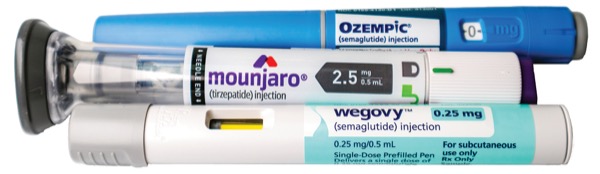
Of 81 total patients, 31 (38.3%) underwent surgery and 18 were lost to follow-up (32 remained in active preoperative follow-up at the presentation date). Among the 31 patients who underwent surgery, the mean age was 57.5 years, 17 (54.8%) were female and the mean BMI on presentation was 37.9±4.6 kg/m2.
It was found that over a mean of 7.5±4.1 months from the initiation of GLP-1 therapy to surgery, the mean percentage total weight loss for surgery patients prior to surgery was 13.8±7.0%. The mean reduction in BMI over the same period was 5.7±3.9, a change that resulted in a mean BMI at surgery of 32.2±3.7.
The study also found that 14 patients (45.2%) elected to continue GLP-1 therapy after hernia repair, six of whom were present at the six-month follow-up. At that point, these patients effectively maintained their preoperative weight loss (surgical BMI 31.4±4.7 vs. six-month BMI 31.2±6.0; P=0.86).
Three surgical patients (9.7%) experienced adverse events in the first 30 days after surgery, including two with tissue flap necroses and one with superficial surgical site infection. Two reoperations (6.5%) took place, both in patients with tissue flap necrosis. Finally, one patient (3.2%) who underwent primary ventral hernia experienced a recurrence.
The study was limited by the fact that nearly 20% of participants were lost to follow-up after being advised to lose weight prior to surgery.
The reasons for this, Dr. Spurzem said, is unclear. “It’s likely that they became discouraged after being told they needed to lose weight instead of scheduling surgery right on the first visit,” he said. Nevertheless, he and his colleagues believe GLP-1 receptor agonists represent a promising opportunity to help patients achieve preoperative weight loss.
“This is encouraging because the literature on hernia prehabilitation programs tells us that it’s really hard for any patient to lose weight before surgery,” he said.
Dr. Spurzem reported no relevant financial disclosures.
This article is from the August 2025 print issue.
Please log in to post a comment