






LONG BEACH, Calif.—Peroral endoscopic myotomy (POEM) is safe and effective as a treatment for achalasia in elderly patients, a new study has concluded. The single-institution retrospective trial also found that reinterventions were rare and typically only necessary in patients with type II achalasia.
“Achalasia can occur in all ages, though there is a pronounced prevalence in the seventh decade of life,” said Konstantinos P. Economopoulos, MD, PhD, MEng, a minimally invasive surgery fellow at Massachusetts General Hospital, in Boston. “While POEM has already been widely adapted for the treatment of achalasia in young adults, the procedure is still cautiously used in elderly patients, mainly due to the presence of comorbidities.
“Whether the same success can be achieved in geriatric patients remains a topic of debate, with a limited number of observational studies and meta-analysis published to date,” he added.
To shed more light on the topic, Dr. Economopoulos and his colleagues assessed the records of 52 patients (mean age, 72.9 years; 52.9% male) at least 65 years of age who underwent POEM for achalasia at the institution between June 2020 and September 2024. The study’s primary outcome was clinical success, which the researchers defined as an improvement in dysphagia score to 1 or better without the need for reintervention in the first six months after surgery. Secondary end points included technical success, rates of reintervention and post-procedural complications.
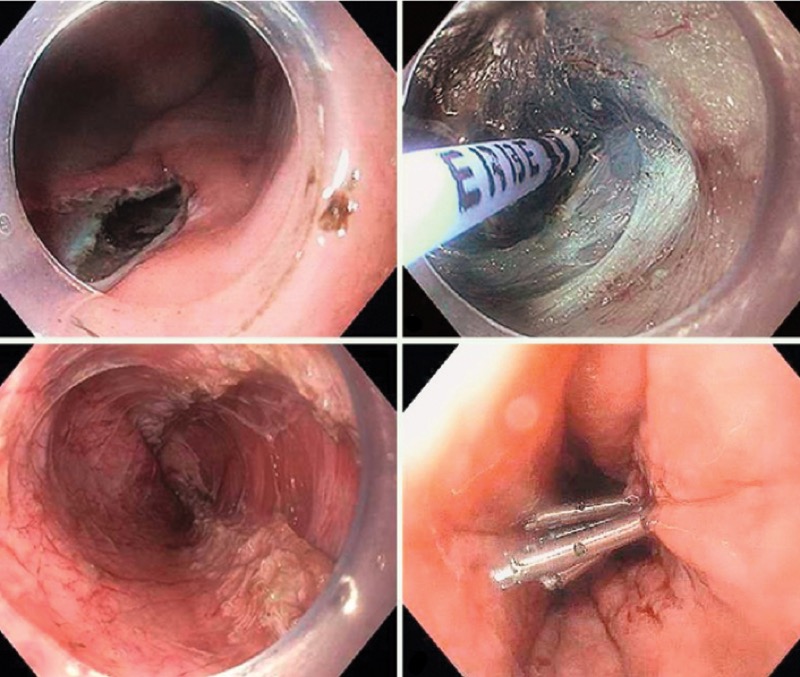
Reporting at the 2025 annual meeting of the Society of American Gastrointestinal and Endoscopic Surgeons, Dr. Economopoulos noted that 27 patients in the cohort (52.9%) had achalasia type II, 13 (25.5%) had achalasia type I and 11 (21.6%) had achalasia type III.
The researchers found that over a mean procedure time of 99.2±48.2 minutes, technical success was achieved in all 51 patients, while clinical success was achieved in 49 patients (96.1%). More than two-thirds of patients (70.6%) were discharged home the same day.
Improvements were also noted in mean dysphagia scores, which changed from 2.16±0.99 before the procedure to 0.04±0.28 at the most recent post-procedural follow-up (P<0.001). Similarly, mean regurgitation scores improved from 1.06±0.95 to 0.04±0.19 (P<0.001).
One post-procedural complication was observed in a patient who experienced atrial fibrillation. Reintervention due to recurrence of symptoms was required in two patients (3.9%) during a mean duration of follow-up of nine months.
The study had several limitations, the authors noted, including a single-institution retrospective cohort design, a relatively small number of patients, a short follow-up period and no comparison with other interventions. “Moreover, all patients had their POEM in our tertiary center, so generalizability to other patient settings may be problematic,” Dr. Economopoulos said.
Despite these potential drawbacks, the investigators concluded that POEM is safe, effective and durable as a treatment for achalasia in elderly patients. “The procedure is associated with improved dysphagia and regurgitation scores, as well as minimal peri- or post-procedural complications,” he added.
Dr. Economopoulos reported no relevant financial disclosures.
This article is from the August 2025 print issue.
Please log in to post a comment