





Alfred Blalock was an American surgeon well known for his research on hemorrhagic shock and the tetralogy of Fallot. He, along with his surgical technician Vivien Thomas and pediatric cardiologist Helen Taussig, developed a procedure to relieve the cyanosis in newborns suffering from tetralogy of Fallot, or the “blue baby syndrome.” At that time, elective surgery conducted on the heart or the great vessels was considered virtually impossible. However, Blalock’s procedure launched the beginning of the era of cardiothoracic surgery in the 20th century. The only comparable procedure that had been performed up to that point was the closure of patent ductus arteriosus pioneered by Robert Gross, the surgical chief resident at Boston Children’s Hospital, in 1938.
In the summer of 1925, Blalock accepted a position of surgical resident at Vanderbilt University Hospital in Nashville, Tenn. At Vanderbilt, Blalock conducted his pioneering work on the nature and treatment of traumatic and hemorrhagic shock—work that is credited with saving the lives of many people during World War II.
In 1930, Blalock hired Thomas as a laboratory technician, to assist him in the laboratory, which proved to be a very fruitful partnership. Blalock and Thomas began performing experimental cardiac and vascular procedures in dogs. A particular area of interest to Blalock was pulmonary hypertension. Using dogs, he devised a procedure in which the subclavian artery was anastomosed to the pulmonary artery to create pulmonary hypertension. No significant discovery was made in the treatment of pulmonary hypertension using this procedure, but it did set the stage for his next innovation.
In 1941, Blalock moved to Baltimore as he accepted the position of surgeon-in-chief at Johns Hopkins Hospital, a position he held until his retirement in 1964. A position was also created for his assistant Thomas. By that time, they were a “package deal,” as both professional colleagues and good friends. Incidentally, Henry Ford Hospital, in Detroit, offered Blalock a position, but the hospital would not include Thomas in the arrangement. The hospital’s policy against hiring Black Americans was inflexible.
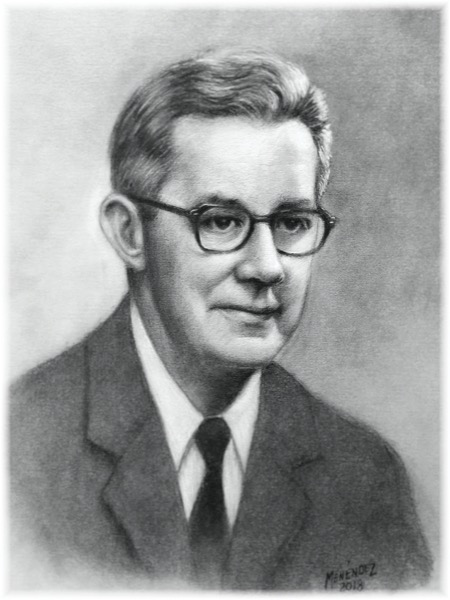
During that time, Taussig, a pediatric cardiologist at Johns Hopkins, frequently treated infants who were cyanotic during and immediately after delivery. Most of these neonates were suffering from the effects of tetralogy of Fallot.
She reasoned that if there was a way to increase blood flow to the lungs, it would help those children who were suffering from cyanosis. Taussig noted that some neonates with congenital cardiac anomalies who also maintained a patent ductus arteriosus survived longer than others whose ductus arteriosus had closed. She assumed that surgically creating an artificial ductus arteriosus could increase the flow of oxygenated blood to the lungs. Subsequently, she sought the advice of Gross, the surgeon who was pioneering the closure of patent ductus arteriosus.
After hearing her idea, Gross expressed doubt, saying, “I have enough trouble closing a patent ductus, without creating one.” Taussig then turned to Blalock for help.
In 1944, Blalock, Thomas and Taussig performed the first successful surgery on a patient with tetralogy of Fallot. An anastomosis was created between the subclavian artery and pulmonary artery, bringing essential oxygen to the lungs. The operation was successful at first, but the patient died a few months later. Despite the ultimate outcome from this first case, Blalock became more comfortable with the procedure and performed it on thousands of children, often with Thomas by his side.
By 1945, this operation had been performed on a total of three infants with pulmonary stenosis and pulmonary atresia. Blalock and Taussig wrote in the Journal of the American Medical Association: “Heretofore there has been no satisfactory treatment for pulmonary stenosis and pulmonary atresia. A ‘blue’ baby with a malformed heart was considered beyond the reach of surgical aid. During the past three months we have operated on three children with severe degrees of pulmonary stenosis and each of the patients appears to be greatly benefited. In the second and third cases, in which there was deep persistent cyanosis, the cyanosis has greatly diminished or has disappeared, and the general condition of the patients is proportionally improved.”
Following this report and lectures given by Blalock and Taussig at conferences around Europe and in America, the procedure quickly gained worldwide acceptance. The new operation not only saved thousands of lives, but it marked the start of the modern era of cardiac surgery, as it was the first successful open heart surgery in the 20th century.
Blalock won various awards and also was nominated several times for the Nobel Prize in Physiology or Medicine.
In 2003, the Public Broadcasting Service series “American Experience” premiered a documentary titled “Partners of the Heart,” which chronicled the collaboration between Blalock and Thomas at Vanderbilt University and Johns Hopkins University. In May 2004, a movie with the title “Something the Lord Made” was released about the accomplishments of Blalock and Thomas.
In 1964, Blalock developed ureteral carcinoma. He died on Sept. 15, 1964.
Suggested Reading
- American College of Surgeons. Alfred Blalock, MD, FACS, 1899-1964. Archives and History. www.facs.org/about-acs/archives/past-highlights/blalockhighlight/
- Hansson N, Schlich T. Why did Alfred Blalock and Helen Taussig not receive the Nobel Prize? J Card Surg. 2015;30(6):506-509.
- Schneider D. The invention of surgery. A history of modern medicine. Pegasus Books; 2020:36-37.
- Van Robays J. Helen B. Taussig (1898-1986). Facts Views Vis Ob Gyn. 2016;8(3):183-187.
- William SW. History of Surgery at Vanderbilt University. Vanderbilt University Medical Center; 1996:52-58.
This article is from the September 2022 print issue.
Please log in to post a comment