





The SUNRISE Trial, a large multicenter randomized clinical trial of patients undergoing emergency laparotomy, has determined that the use of incisional negative pressure wound therapy does not result in a reduction in the rate of surgical site infections compared with a surgeon’s choice of wound dressing.
“Patients undergoing unplanned abdominal surgical procedures are at increased risk of SSI,” the authors of the study wrote. However, they concluded that “routine application of iNPWT [incisional negative pressure wound therapy] to the closed surgical wound after emergency laparotomy did not prevent SSI more than other dressings” (JAMA 2025;333[10]:853-863).
The study was conducted at 22 hospitals in the United Kingdom and 12 in Australia and focused on adult patients who underwent emergency laparotomy from Dec. 18, 2018, through May 25, 2021. A total of 840 patients were included in the study: 536 from the United Kingdom and 304 from Australia. Patients were randomized 1:1 to receive either the surgeon’s choice of wound dressing or an iNPWT (PICO 7, Smith & Nephew). All were followed for 30 days post-procedure.
After post-randomization exclusions, a total of 394 study participants per cohort were included in the primary analysis. At 30 days post-procedure, there was no statistically significant difference in the rate of SSIs between patients in the two groups (28.4% iNPWT vs. 27.4% surgeon’s choice).
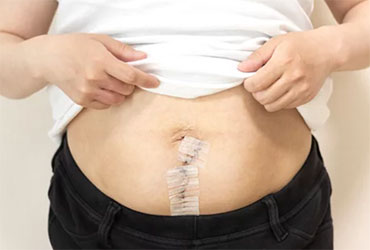
“As demonstrated in peer-reviewed literature, abdominal surgery falls into the category of surgical procedures and areas of anatomy that have higher rates of surgical site complications and SSIs,” said Ralph J. Napolitano Jr., DPM, CWSP, the director of wound care and healing at OrthoNeuro in New Albany, Ohio. “Emergency (and elective) abdominal surgeries can see higher postoperative complication rates versus other surgical procedures due to the potential for abdominal contamination, bowel damage/injury and fecal spillage.”
The study, Dr. Napolitano said, sheds light on the abdomen as a key entry point/gateway to manage and address trauma, communicable diseases and injury, such as cancer and hernias. However, he noted, “it lacks inclusion and citation of multiple NPWT systems for managing at-risk closed incisions, each with different technologies and mechanisms of action that could deliver different postoperative outcomes in the same clinical space.
“Simply put, not all NPWT systems are the same,” he said. “This randomized controlled trial found that the use of one specific NPWT system … did not show any favorable benefit in reducing SSIs versus standard-of-care dressings.”
Since the study only assessed the use of a single iNPWT system, the question remains as to whether other systems would yield similar results.
“A recent 2024 systematic review and meta-analysis of 22 studies from nine countries (3,655 total patients: 1,586 receiving ciNPT [closed-incision negative pressure wound therapy] and 2,069 receiving a standard-of-care approach) undergoing various abdominal surgical procedures yielded different and favorable outcomes with [3M] Prevena Therapy [Solventum] compared to standard-of-care dressings [Eplasty 2024;24:e33],” Dr. Napolitano said. “The findings indicated that the Prevena system significantly reduced SSIs and SSCs by nearly 50% and significantly reduced readmission rates and hospital length of stay.
“A comparative study of both systems would be a fair and balanced way to assess whether NPWT over closed incisions can help reduce postoperative complications for abdominal surgery,” he said.
This article is from the August 2025 print issue.
Please log in to post a comment