





Scientists have created a face mask that can detect common respiratory viruses, including influenza and coronavirus, in the air in droplets or aerosols. The highly sensitive mask can send an alert to the wearer’s mobile phone within 10 minutes if targeted pathogens are present in the surrounding air (Matter 2022 Sep 19. https://doi.org/10.1016/ j.matt.2022.08.020).
“Previous research has shown face mask wearing can reduce the risk of spreading and contracting the disease. So, we wanted to create a mask that can detect the presence of virus in the air and alert the wearer,” said Yin Fang, PhD, the study’s corresponding author and a material scientist at Shanghai Tongji University.
Small droplets and aerosols from some respiratory pathogens can remain suspended in the air for a while.
Dr. Fang and his colleagues tested the mask in an enclosed chamber by spraying the viral surface protein containing trace-level liquid and aerosols on the mask. The sensor responded to as little as 0.3 mL of liquid containing viral proteins, about 70 to 560 times less than the volume of liquid produced in one sneeze and much less than the volume produced by coughing or talking, according to Dr. Fang.
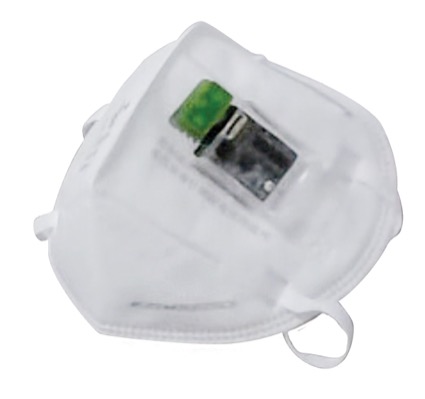
The team designed a small sensor with aptamers, which are a type of synthetic molecule that can identify unique pathogenic proteins. In their proof-of-concept design, the team modified the multichannel sensor with three types of aptamers, which can simultaneously recognize surface proteins on SARS-CoV-2 and the H5N1 and H1N1 influenza viruses.
Once the aptamers bind to the target proteins in the air, the ion-gated transistor connected will amplify the signal and alert the wearers via their phones. An ion-gated transistor is a novel type of device that is highly sensitive, and thus the mask can detect even trace levels of pathogens in the air within 10 minutes.
“Our mask would work really well in spaces with poor ventilation, such as elevators or enclosed rooms, where the risk of getting infected is high,” Dr. Fang said. In the future, if a new respiratory virus emerges, they could easily update the sensor’s design for detecting the novel pathogens, he added.
Next, the team hopes to shorten the detection time and further increase the sensitivity of the sensor by optimizing the design of the polymers and transistors. They are also working on wearable devices for a variety of health conditions including cancers and cardiovascular diseases.
This article is from the November 2022 print issue.
Please log in to post a comment