





The era of modern surgery in the United States did not begin to take hold until the late 1800s. Infection rates were still very high and outcomes were generally poor, especially given that early surgical techniques were rudimentary at best, and at times barbaric. The discovery of anesthesia in 1847 facilitated improvements in surgery, but significant complications were still very common.
Then in 1889, pioneers at the Johns Hopkins Medical School debuted a model that would fundamentally change the way young doctors, and specifically surgeons, were educated and trained. One of the pioneers at this school was William Halsted. He emphasized strict aseptic techniques during surgical procedures, championed the extended use of general anesthesia, and introduced several new operations, including the radical mastectomy for breast cancer.
Born into a wealthy New York family in 1852, Halsted was educated at the medical schools of Yale and Columbia universities. After brief training in New York hospitals and two years visiting European clinics, Halsted became one of New York’s most successful surgeons. During his trip to Europe, he studied surgery under the tutelage of several prominent surgeons and scientists, including Edoardo Bassini, Theodor Billroth and Hans Chiari.
After returning from Europe in 1880, Halsted started a successful surgical practice, and for the following years, he had a vigorous and energetic life. However, in 1884, he experimented with cocaine as a form of local and regional anesthesia, including on himself. Eventually, he and other colleagues became addicted to the drug. As a result, Halsted spent most of 1886 confined to a sanatorium in Providence, R.I. Morphine was used in the hope that it would cure his addiction to cocaine, but he subsequently became addicted to morphine. Halsted moved to Baltimore in 1886, to join Dr. William H. Welch, his devoted friend and mentor.
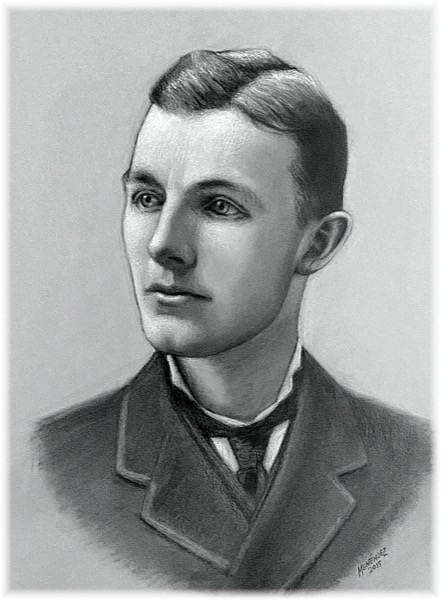
Along with William Osler (a professor of medicine), Howard Atwood Kelly (a professor of gynecology) and Welch (a professor of pathology), Halsted was one of the “big four” founding professors at the Johns Hopkins Hospital. He developed a novel residency training program at the hospital that, with some modifications, became the model for surgical residency training in North America. Johns Hopkins Hospital was the origin of the modern residency training concept in North America.
Although Halsted remained dependent on morphine for the rest of his life, he continued his career as a pioneering surgeon, and many of his innovations remain standard OR procedures. Thanks largely to him, surgeons worldwide began wearing gloves during operations. One of his nurses, Caroline Hampton, whom he later married, complained that the mercuric chloride she was using as a hand wash gave her a rash. He then asked the Goodyear Rubber Company to manufacture such surgical gloves.
Halsted’s residency program provided a formal and structured form of education for surgical trainees, replacing the apprenticeship training model that had existed before it. Halsted based his training model on elements of surgical training he had observed in Germany. One fundamental element in Halsted’s model was that there were tiers, including multiple entry- and mid-level positions, but only one senior position or chief. Junior trainees learned hands-on patient management and operative skills under the supervision of a more senior resident, instead of the professor. Many prominent figures in the field of surgery were directly influenced by Halsted’s new system of training, and it has had a profound impact on American medicine.
Many innovations still in use today are credited to Halsted. He advocated the gentle handling of tissues, careful hemostasis, the avoidance of dead space and a meticulous surgical technique at a time when speed, inattention to hemostasis and rough handling of tissues were the rule. Halsted was the first surgeon in the United States to favor the use of fine silk as a suture material, as opposed to the heavy catgut that was commonplace for most surgeons of the time. His impact and influence on the surgical field were far-reaching.
During his Hopkins days (1886-1922), Halsted was rather reclusive, and little is known of his personal life. He was married but had no children. The Halsteds lived a strange, sequestered life in a large house where each member had their own quarters. Halsted had a detached personality and would easily lose interest in endeavors, even when he was operating. As an example, he would start an operation, continue for a while, and then seem to become tired and say to his assistant, “You see what I want to do; you finish it,” and walk away. Apparently, because of his reticent and reclusive personality during his most productive days in Baltimore, many of the accolades and honors that he would have likely received were not given to him.
Halsted died on Sept. 7, 1922, 16 days short of his 70th birthday, from bronchopneumonia as a surgical complication after suffering from cholangitis.
Sources
- Fulton J. Harvey Cushing. A Biography. Charles C. Thomas; 1946:141-143.
- Osborne MP. William Stewart Halsted: his life and contributions to surgery. Lancet Oncol. 2007;8(3):256-265.
- Winter FD Jr. Genius on the edge: the bizarre double life of Dr. William Stewart Halsted by Gerald Imber, MD. Proc (Baylor Univ Med Cent). 2012;25(1):95-97.
- Wright JR Jr, Schachar NS. Necessity is the mother of invention: William Stewart Halsted’s addiction and its influence on the development of residency training in North America. Can J Surg. 2020;63(1):e13-e18.
This article is from the November 2022 print issue.
Please log in to post a comment