





CLEARWATER BEACH, Fla.—Patients with a history of abdominal surgery are at risk of developing adhesive disease and subsequent small bowel obstruction, but the type of prior abdominal surgery doesn’t appear to influence whether they will require surgical intervention for SBO, according to new research.
Some studies have shown that conservative management of SBO with small bowel follow-through within 24 to 48 hours can reduce the need for operative intervention and shorten time to surgery for patients who fail conservative management, as well as cut down on hospital length of stay and cost, said Alexandra Van Horn, MD, a surgical resident at Eastern Virginia Medical School, in Norfolk.
“However, other studies suggest decreased rates of recurrence in the long term with earlier surgical intervention. We wanted to see whether surgical intervention for SBO was more likely following specific surgeries. If we can better elucidate which surgeries have a greater association with adhesions, we may be better able to adjust our management,” Dr. Van Horn said, presenting the study at the 2024 Southeastern Surgical Congress (SESC).
To investigate possible associations, Dr. Van Horn and her colleagues conducted a retrospective chart review of 799 patients across nine hospitals admitted for SBO between 2012 and 2019, stratifying them by surgical history: appendectomy; hepatobiliary surgery; hernia repair; small bowel or colon surgery; colorectal cancer; gastric surgery; transplant, renal or vascular surgery; pelvic surgeries; and undefined exploratory laparotomy and miscellaneous laparoscopies.
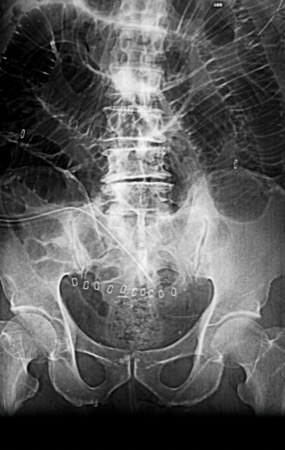
Patients who underwent immediate operative intervention on presentation for SBO were excluded.
Of the 799 patients admitted for SBO, 206 underwent surgical intervention after failing conservative management while the rest were managed conservatively. There was no significant difference between the operative and nonoperative groups in number of prior surgeries or comorbidities.
“Additionally, of the operations evaluated, there was no specific type of prior abdominal surgery that predicted the need for surgical intervention in the setting of SBO,” Dr. Van Horn said.
In both the operative and nonoperative arms, pelvic surgery was the most common type of prior surgery, making up 45% and 43% of each group, respectively, and it was significantly more common in female patients, who comprised 54% of the entire cohort, than in male patients.
“Cesarean sections, hysterectomies and other operations for female reproductive pathologies may result in greater adhesive burden leading to SBO, but our data didn’t fully elucidate that,” Dr. Van Horn said.
Edward Cornwell III, MD, a trauma and critical care surgeon at Howard University Hospital, in Washington, D.C., and immediate past president of the SESC, commented that the findings may be a quirk of statistics, given that 46% of the cohort, being male, would not have a history of cesarean delivery or hysterectomy.
“Statistics should either confirm or refute a bias. I have an anecdotal impression that when I see a patient with a prior hysterectomy, I’ll likely be intervening and certainly be reluctant to draw treatment out. I wonder what you’d find if you looked at that proportion of roughly half the patients as opposed to all of the patients,” Dr. Cornwell said.
Dr. Van Horn agreed that it would be interesting to break down the finding further and run the statistics such that “being aware of female patients with a history of pelvic surgery who present with concern for SBO may prompt surgeons to take these patients more expeditiously to the operating room for definitive management instead of attempting conservative measures first.”
This article is from the November 2024 print issue.
Please log in to post a comment