





SAN FRANCISCO—Managing hernias in morbidly obese patients is a thorny problem in the best of circumstances. But what about in the worst? In a presentation at the Clinical Congress of the American College of Surgeons, Olliver Núñez Cantú, MD, a general surgeon at Centro Médico ABC in Mexico City, addressed the question, offering two effective approaches in these less-than-optimal situations.
“This is a real challenge; most of the time, prehabilitation is not possible in these patients. While ideal, it is often impossible to complete standardized repairs due to contamination at the hernia site,” Dr. Núñez Cantú said. “We need strategies to address these two problems.”
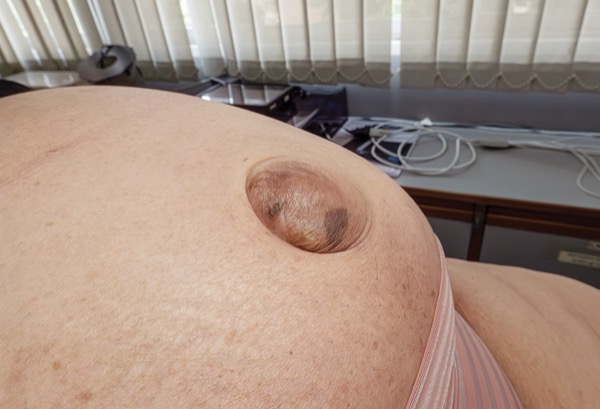
He shared three example cases:
- a patient with a history of more than 24 hours of incarcerated umbilical hernia and potential contamination;
- another with a colonic fistula with bowel obstruction and infection at the scar site; and
- a patient with acute cystitis and a large abdominal wall defect in which re-approximating the midline was likely impossible.
None of the cases admit of standard solutions, with polypropylene mesh being ruled out for safety reasons, Dr. Núñez Cantú said. He presented two alternatives to standardized repairs in cases like these: the reinforced tension line (RTL) suture and the Da-Silva, Malmo peritoneal flap. “These two strategies are very good for these conditions when we are not able to have prehabilitation in the operating room, in the emergency setting,” he said.
The RTL suture offers the patient a good chance for a definitive repair in cases complicated by contamination, he said, noting that the technique dates back to a 2007 study by Hollinsky et al, in which the authors reported that it distributes the loads that impinge on the suture base to the surrounding tissue, making it an effective option for abdominal wall hernias in cases where mesh is contraindicated (Am J Surg 2007;194[2]:234-239).
Sharing videos from his example cases, Dr. Núñez Cantú explained that the basic principle is to create two running lines using polypropylene sutures that encompass the hernia defect, secured on either side, which serves as an anchor point, and another running suture line outside of the RTL that serves as a secondary reinforcement, further distributing the tensile loads. The result is a strong closure that is unlikely to result in hernia recurrence. The technique works for laparoscopic procedures as well, he said.
Dr. Núñez Cantú noted that the second technique he described, the Da-Silva, Malmo flap—another established but not well-known procedure—can be used with mesh in cases without contamination, but also works without it.
“This is a modified peritoneal flap. We use the hernia sac; we separate the sac from the skin and open the sac in the middle,” he explained, using visual aids from the example case of the patient with acute cholecystitis and a large abdominal wall defect. “One side comes behind the rectus abdominis muscle, and the other side is attached to the anterior aponeurosis.”
Dr. Núñez Cantú concluded that in complex emergency cases like the ones he described, the RTL and Da-Silva, Malmo peritoneal flap techniques can offer patients the best long-term results.
Ivanesa Pardo, MD, the chief of minimally invasive surgery and bariatric surgery at MedStar Washington Hospital Center, in Washington, D.C., said the talk was “eye-opening” and prompted her to research these unfamiliar techniques. She noted that the RTL technique in particular warrants further investigation, not only for emergency surgery but also for its potential role in preventing incisional hernias after elective laparotomy.
“There are some intriguing results in the literature about RTL, primarily European studies,” Dr. Pardo said. “One especially intriguing study compared the rate of incisional hernias following laparotomy following 4:1 suture closure versus RTL and found a lower rate in patients who underwent RTL [Br J Surg 2024;111(10):znae265]. I would love to see more data on that association.”
The Da-Silva, Malmo flap, in her view, is less likely to be of use to practitioners in the United States, due both to the unfamiliarity of the technique and availability of non-permanent mesh options.
“In theory, it sounds like a great technique to have under your belt for a complex patient, and of course as a surgeon you want to have as many tools at your disposal as possible, but I don’t know if I would realistically use this technique in a true emergency situation,” Dr. Pardo said. “But we typically don’t have to do a complex abdominal reconstruction in the middle of the night; we have the option to temporize with the use of a non-permanent mesh and then do a hernia repair later on.”
This article is from the April 2025 print issue.
Please log in to post a comment