





LONG BEACH, Calif.—More than 6% of individuals undergoing emergent hernia repair will require another emergency repair within 10 years, new research has concluded. The study found several factors to be associated with increased risk for recurrent emergency repairs, including female sex, social vulnerability and care at for-profit hospitals.
“As a resident I’ve noticed multiple times where emergency hernia patients would be back at the emergency room requiring another emergent hernia repair within a few years of their first surgery, which felt to me like a system failure,” said Erin Isenberg, MD, MSc, a general surgery resident at the University of Texas Southwestern Medical Center, in Dallas. “After all, if we had been able to identify patients at risk of recurrent emergency surgery, then we could have perhaps been more careful about keeping track of them after their initial operation.
“But we don’t really know how often this is happening, and we don’t really know the risk factors associated with recurrent emergency surgery,” she continued. “In that context, our objective was to identify the incidence and contributing factors of the population requiring repeat emergent hernia repairs.”
The researchers queried the Medicare 100% file for patients who underwent an index emergency ventral hernia repair between 2011 and 2021. Armed with those data, they then performed a multivariable risk-adjusted survival analysis (accounting for patient comorbidities, demographics and repair characteristics) to determine the cumulative incidence of recurrent emergency hernia repair within 10 years. A series of patient, provider and community factors were also analyzed for possible associations with an increased risk for recurrent emergency surgery.
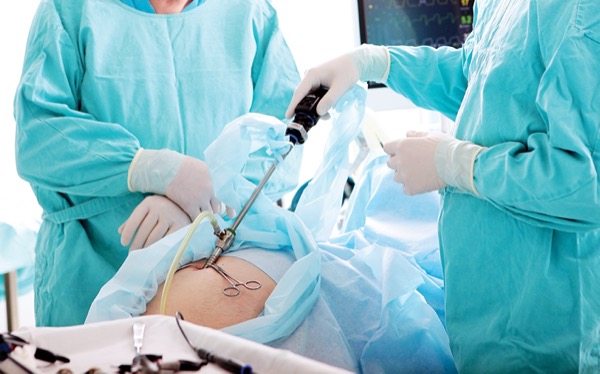
In a presentation at the 2025 annual meeting of the Society of American Gastrointestinal and Endoscopic Surgeons, Dr. Isenberg reported that the final study cohort comprised 120,227 Medicare beneficiaries (mean age, 71 years; 58% female) who underwent emergency hernia repair during the study period.
It was found that at 10 years, the cumulative incidence of recurrent emergency hernia repair was 6.4% (95% CI, 6.2%-6.7%). The median time to recurrent repair was 1.6 years (IQR, 0.8-3.2 years).
Patients undergoing repeat emergent repairs were more likely to be on Medicare for disability (27% vs. 17%; P<0.001) and dual eligible for both Medicare and Medicaid in the unadjusted cohort comparisons (35% vs. 28%; P<0.001). A number of factors were associated with increased risk for recurrent emergency repair, including:
- female sex (5-year hazard ratio [HR], 1.37; 95% CI, 1.29-1.68);
- patients in the highest quintile of social vulnerability (5-year HR, 1.26; 95% CI, 1.08-1.47);
- patients undergoing open hernia repair (5-year HR, 1.35; 95% CI, 1.11-1.63); and
- hernias repaired at for-profit (vs. not-for-profit) hospitals (5-year HR, 1.16; 95% CI, 1.06-1.26).
Hispanic patients were also at higher risk compared with all other racial and ethnic groups.
Conversely, a number of factors were found to not be associated with a statistically significant increased risk for recurrent emergent repair, including hernia surgeon volume, hospital urban/rural status and residing in an area with a shortage of health professionals.
“To summarize, the 10-year incidence of recurrent emergency hernia repair was over 6%, which is not insignificant,” Dr. Isenberg concluded.
“What does this mean for care going forward?” she continued. “I think it’s important we identify these groups so we can think about closer postoperative surveillance. And it’s not like we have to keep track of them for five years, as patients undergoing emergency hernia repair care usually need it within one to two years.”
Dr. Isenberg reported no relevant financial disclosures.
This article is from the September 2025 print issue.
Please log in to post a comment