





NEW ORLEANS—Negative pressure therapy has been shown to improve wound healing by decreasing inflammation and promoting granulation tissue. A new study presented at the 2025 Southeastern Surgical Congress suggests endoluminal vacuum therapy could be useful in managing esophageal injury.
To evaluate the safety and effectiveness of wound vac therapy in esophageal injury, researchers at the University of South Carolina School of Medicine conducted a retrospective study of all adult patients undergoing negative pressure therapy for esophageal injury.
“This included all esophageal injuries as well as anastomotic leaks from a prior resection. Our primary end point was closure of the esophageal injury using negative pressure therapy,” said Benjamin Smith, MD, a surgery resident at Prisma Health–Upstate/University of South Carolina School of Medicine Greenville.
Secondary end points included length of stay, the number of days the wound vac was in place and the number of wound vacs used.
The study included 31 patients, and met the primary end point of wound closure in nearly 97%. “This represents one treatment failure in an individual with extrinsic compression from vertebral fragments and metallic hardware related to spinal surgery,” Dr. Smith said.
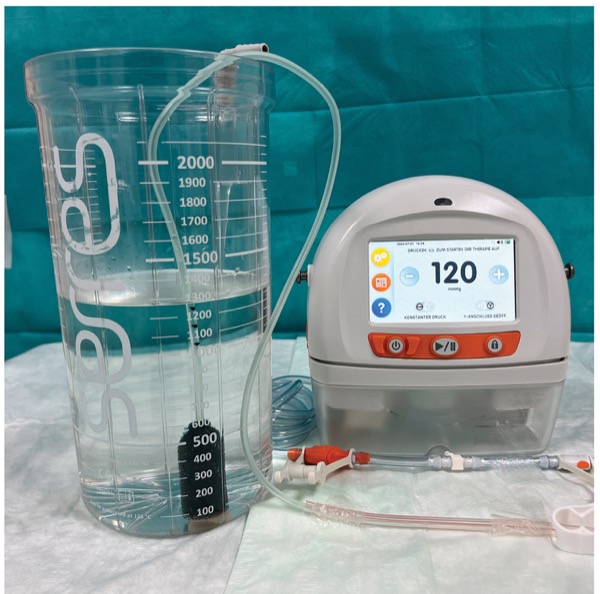
The majority, 87%, experienced defect closure while the wound vac was in place. Of those who did not, two had chronic fistulas at the gastroesophageal junction that became too small for the wound vac to be re-placed; these patients healed with a nasogastric tube and expectant management.
“It’s important to note that five of our patients had initial attempts at surgical repair which leaked and was salvaged with negative pressure therapy,” Dr. Smith said.
For the secondary end points, length of stay increased with higher severity scores, as did length of treatment and number of wound vacs used. The frequency of wound vac changes decreased with increasing severity scores. “These were not statistically significant due to our study’s size, but it does show a nice trend,” Dr. Smith said.
Stricture was the most common long-term complication, with about 25% requiring dilation.
“This research is important to us because it allows us to give patients and their families realistic expectations about what their treatment might look like. We’ve shown that this is an effective primary treatment as well as a salvage therapy,” Dr. Smith said.
Jose Diaz, MD, the chief of the Division of Acute Care Surgery at the University of South Florida, Tampa, who has used negative pressure therapy in his practice and found it useful in scenarios where stent placement would be difficult, noted that the 87% closure rate is consistent with the literature.
“This is a novel use of the wound vac that is gaining evidence for its use, and patient selection is really the next barrier in its wider applications,” Dr. Diaz said. However, he asked about the role of debridement before placing wound vacs.
“We do debride the wounds if required, and that’s important for the chronic fistula patients to break down some of that granulation tissue and get back to healthy tissue,” Dr. Smith said.
This article is from the June 2025 print issue.
Please log in to post a comment