






Over the past decade, a narrative has steadily taken hold in surgical education: that robotic surgery is not merely a tool but a fundamental skill, one so essential that its presence appears embedded within the core of general surgery, minimally invasive surgery (MIS), and advanced GI fellowship training. This elevation has occurred with surprising speed and, in my view, without adequate scrutiny, without pedagogical justification, and with significant influence from interests outside the domain of true surgical education.
As the surgeon who performed the first robotic single-site, extraperitoneal bilateral inguinal hernia surgery (single-incision robotic TEP) in the United States in 2014 and the first robotic sleeve gastrectomy in the South Bay, in Los Angeles County, I do not approach this discussion from the perspective of someone unfamiliar with the technology. I invested deeply in robotic platforms. Yet I remind my fellows frequently that robotic proficiency is not synonymous with surgical craftsmanship. One turns the surgeon into a machinist; the other develops the surgeon’s hands, judgment, and adaptability.
The question we must continuously ask is straightforward: Can I accomplish this task without relying on an increasingly complex array of technology? This was one of the main reasons I stepped away from robotic surgery eight years ago. I take personal pride in the elegance of free-needle suturing and in teaching my fellows to stitch using nothing more than a pair of laparoscopic scissors! Ultimately, our skills—not our machines—define who we are.
A Concerning Shift in Educational Priorities
The introduction of Fundamentals of Robotic Surgery (FRS) and similar training modules have been welcomed with enthusiasm, yet the speed with which these programs have been integrated into core residency curricula—often with substantial influence from industry—warrants careful reevaluation. Many years ago, Dr. Henry Buchwald raised a remarkably prescient concern in General Surgery News. In his 2016 opinion article, “Why an Open Abdominal Surgery Specialist Fellowship?”1 he warned that the pendulum had swung so far toward laparoscopy that residents were losing essential open operative skills. Although his argument addressed a different technological shift, the underlying principle is equally important today: When training becomes disproportionally anchored to one modality, the fundamental breadth of surgical education is threatened.
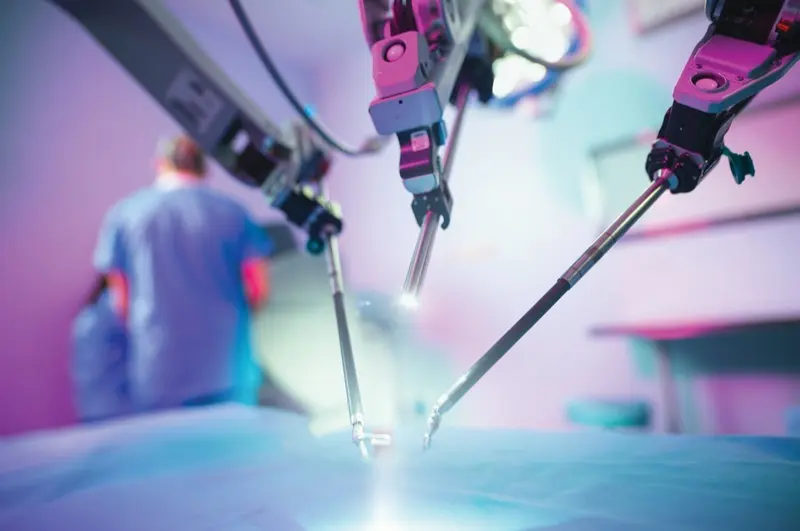
Just as open surgery remains foundational to our professional identity, laparoscopic mastery remains foundational to advanced GI and bariatric surgery. Robotic surgery, however, is not. Yet we increasingly see training environments where robotic platforms are emphasized to such an extent that they become the default operative strategy. This is a concerning shift, especially when the underlying skill set on which these platforms rely is not being cultivated in parallel.
The Workforce Data: A Troubling Signal
These concerns are not hypothetical. Three years ago, I interviewed 37 MIS/bariatric fellowship graduates for a single position. Of these interviewees, 36 asked about dedicated robotic block time and whether they would be permitted to perform robotic bariatric cases immediately upon starting. Only one expressed unequivocal confidence in performing the same operations laparoscopically. I hired that one. More recently, an otherwise impressive MIS fellow who interviewed for a position presented a long list of robotic bariatric cases performed during training. When I asked whether they were equally comfortable performing these same procedures laparoscopically, the silence that followed was long and telling. Although this silence does not reflect personal deficiency, it demonstrates a systemic educational imbalance that we, as faculty and leaders, must address.
A Growing Chorus of Concern
For years, I felt like a lone salmon fighting upstream, the solitary voice calling out—much like the child who dared to say the king was naked—whenever I questioned the profession’s growing overreliance on robotic surgery in training. That changed when I read Dr. Brent Matthews’ thoughtful message to the profession, published through the Society of American Gastrointestinal and Endoscopic Surgeons, which articulated similar concerns.2 Since that time, I have observed a notable rise in the number of respected colleagues echoing the same sentiments across professional forums and social platforms. The collective concern is not rooted in resistance to innovation but in the recognition that the pendulum has swung too far.
Industry Influence and Curriculum Creep
The robotic platform did not become central to residency training organically. Its rise reflects a confluence of pressures: hospitals competing aggressively for robotic marketing prestige, applicants who believe—often incorrectly—that robotic proficiency is necessary for employability, and institutions that expand robot block time to appear competitive in the training landscape. Industry understandably supports this momentum. Yet the unintended, or perhaps intended, result is a generation of trainees whose operative identity is increasingly tied to one proprietary platform and who may struggle to perform even straightforward operations without the robotic console. As educators, we must ask whether this trend truly serves the best interests of our patients, our trainees, or our profession.
Where the Robot Belongs And Where It Does Not
I am not opposed to robotic surgery, nor do I deny that there are clinical scenarios where it may provide genuine benefit. A rare example might include a very low rectal cancer in a narrow male pelvis with a body mass index of 70 kg/m2, in which the robot’s articulation may help avoid a difficult open conversion. Situations like this exist, and in those selected cases, robotic assistance can be valuable. But their rarity underscores the larger point: Robotic platforms are not fundamental to the practice of benign foregut, bariatric, or abdominal wall surgery. For nearly all such operations, a capable laparoscopic surgeon can perform the procedure with equal or greater efficiency, shorter turnover, lower cost, and without reliance on complex machinery.
A Call for Rebalancing
The issue is not the presence of robotics, but the need for equilibrium, where technology complements rather than supplants foundational operative skills. It is essential to reaffirm that robotic surgery is a tool, not a fundamental; that laparoscopy must remain the backbone of MIS training; that operative judgment, tissue respect, adaptability, and craftsmanship—rather than console hours—are the defining attributes of surgical excellence; and that curriculum design must be driven by educators and evidence, not by industry influence or competitive marketing pressures. If we fail to correct this course, we risk producing surgeons who are proficient only on one platform rather than surgeons with broad, timeless, universal operative skill.
Evidence-Based Data
Several peer-reviewed analyses have examined the comparative effectiveness of robotic versus laparoscopic approaches in common general surgery procedures. Although methodology varies, the collective findings suggest a consistent pattern: Robotic operations tend to incur higher hospital costs and longer operative times without demonstrating measurable improvements in short-term clinical outcomes. Propensity-matched analyses of ventral hernia repairs have shown comparable complication and early recurrence rates between robotic and laparoscopic techniques, yet with substantially increased operative expense and time in the robotic cohort. Similar cost disparities have been reported in elective robotic inguinal hernia repair, again without evidence of superior perioperative results. Large national database reviews of benign GI operations reinforce these observations, identifying higher costs and, at times, longer length of stay for robotic procedures without improved complication profiles. While the existing literature is limited by short-term follow-up and a lack of randomized trials, the absence of demonstrated clinical benefit raises legitimate concerns about whether robotic platforms should be considered foundational to general surgical training.3-6
Similar patterns are seen in bariatric and gallbladder surgery. Recent systematic reviews and meta-analyses comparing robotic and laparoscopic sleeve gastrectomy—including large cohorts of patients with class III obesity—consistently show no meaningful clinical advantage to the robotic approach. Across these studies, robotic sleeve gastrectomy is associated with significantly longer operative times and, in many series, higher costs, while rates of staple-line leak, bleeding, surgical site infection, readmission, and early weight loss outcomes are comparable to conventional laparoscopy.7,8
In cholecystectomy, large administrative and commercial database analyses also fail to demonstrate superiority of the robotic platform. A Medicare cohort of more than 1 million patients found that, as robotic cholecystectomy use increased 37-fold over a decade, the rate of major bile duct injury was significantly higher with robotic-assisted cholecystectomy than with standard laparoscopy, with no offsetting reduction in overall complications.9 Subsequent work using national claims and commercial data sets has reported similar bile duct injury rates in some acute care settings but higher postoperative complication rates, more frequent drain use, longer length of stay, and greater resource utilization in the robotic group.10,11 Taken together, the best available evidence does not support a consistent clinical benefit for robotic platforms in routine bariatric or gallbladder surgery—and certainly does not justify elevating robotics to a “fundamental” position in general surgery training.
The fundamentals of laparoscopic surgery program has been the American Board of Surgery’s validated and board-endorsed skills requirement for eligibility to sit for the general surgery qualifying examination since the 2009-2010 academic year. In contrast, there is no analogous, board-mandated, or validated skills examination for any robotic platform, underscoring that robotic proficiency has never been considered foundational to surgical competence or certification in general surgery.12-14
Job market realities also argue against the notion that robotic proficiency is fundamental. Most publicly posted general surgery positions continue to emphasize broad operative competence and strong laparoscopic skills. Robotic experience, when mentioned, is often listed as “preferred” or “welcome” rather than a strict requirement, in sharp contrast to the perception among many trainees that console proficiency has become a universal prerequisite for employment.
Cost-effectiveness analyses further weaken the argument for classifying robotic surgery as a fundamental skill. Independent evaluations estimate that robotic procedures add approximately $1,600 to $3,500 per case through increased amortization costs, longer OR turnover, higher disposable instrument fees, and ongoing maintenance expenditures.15 When clinical outcomes do not exceed those of established laparoscopic techniques, allocating educational, administrative, and financial resources toward high-volume robotic training becomes difficult to justify. These escalating expenses have broader implications for access, equity, resource stewardship, and the sustainability of surgical practice—considerations that should weigh heavily in discussions about what truly constitutes a fundamental training requirement.
A Call to Protect the Foundations of Surgical Training
Ultimately, our responsibility as educators is to train surgeons, not technicians. Technology will continue to advance, but the foundation of surgical training must remain anchored in judgment, versatility, and mastery of essential, enduring skills. Robotic surgery has an important place in modern practice, yet it should complement—rather than overshadow—the craft, discipline, and adaptability that define true surgical expertise. By restoring balance in our training programs, we can embrace innovation without allowing it to eclipse the fundamentals. In doing so, we ensure that the next generation of surgeons is prepared not only to use new tools, but to care for patients with the full breadth and depth our profession demands.
References
- Buchwald H. Why an open abdominal surgery specialist fellowship? General Surgery News 2016;42(2):1.
- A message from SAGES President Dr. Brent Matthews. November 23, 2025. Accessed January 8, 2026. sages.org/a-message-from-sages-president-dr-brent-matthews-3/
- Tolboom RC, Kolkman W, Stam MAW, et al. Surg Endosc. 2022;36(6):4651-4659.
- de Goede B, Strik C, van Kruijsdijk RMC, et al. Surg Endosc. 2021;35(3):1116-1125.
- Ecker BL, Sales TF, Zayaruzny M, et al. JAMA Network Open. 2021;4(3):e211164.
- Sawyer RG, Campbell WH 3rd, Flum DR, et al. Ann Surg. 2020;272(2):345-352.
- Kossenas K, Kouzeiha R, Moutzouri O, et al. Obes Surg. 2025;35(6):2333-2341.
- Tasiopoulou VS, Svokos AA, Svokos KA, et al. Minerva Chir. 2018;73(1):55-63.
- Kalata S, Thumma JR, Norton EC, et al. JAMA Surg. 2023;158(12):1303-1310.
- Woldehana NA, Jung A, Parker BC, et al. JAMA Surg. Published online May 21, 2025. doi:10.1001/jamasurg.2025.1291
- Mullens CL, Sheskey S, Thumma JR, et al. JAMA Netw Open. 2025;8(3):e251705.
- Training requirements. The American Board of Surgery. Accessed January 8, 2026. absurgery.org/get-certified/general-surgery/training-requirements/
- Bulletin of information. SAGES Fundamentals of Laparoscopic Surgery Program. Accessed January 8, 2026. flsprogram.org/wp-content/uploads/2014/07/FLS-Information-Bulletin-2020.pdf?utm_source
- SAGES resource guide. Accessed January 8, 2026. sages.org/about/resources/
- Zaman JA, Singh TP. Hepatobiliary Surg Nutr. 2018;7(1):21-28.
Dr. Roohipour is an advanced GI/MIS and bariatric surgery fellowship program director at R&R Surgical Institute, in Los Angeles, California. He is also the president and chairman of the Board of Trustees at the Southern California School of Medicine, a newly established nonprofit allopathic medical school in Los Angeles. He can be reached at ramin.roohipour@scsm.org.
Editor’s note: The views expressed in this opinion article belong to the author and do not necessarily reflect those of the publication.
This article is from the February 2026 print issue.
Please log in to post a comment
Great article. I am happy to have trained in a time period before robot was prevalent in practice. Learned the open abdominal cases along with strong laparoscopic skills that have carried me through my years in practice. Cannot even imagine a surgeon finishing residency and not being proficient in laparoscopic inguinal or cholecystectomy.