





[The following is an edited transcript of a video interview between Peter Kim, MD, a general surgeon and the host of the “Between Two Scalpels” video series, and David Sherer, MD, an anesthesiologist from Maryland. The two physicians discuss the working relationship between surgeons and anesthesiologists.]
Dr. Peter Kim: Welcome to this episode of “Between Two Scalpels.” This is the first-ever video collaboration between General Surgery News and Anesthesiology News [a sister publication at McMahon Publishing]. I would first like to thank all the anesthesiologists, nurse anesthetists and anesthesia assistants for their work during the COVID-19 pandemic. Without you on the front lines, we could not take care of those patients. Our guest today is Dr. David Sherer.
Dr. David Sherer: Thank you for having me. I appreciate the opportunity. I’ve been an anesthesiologist for over 35 years and retired from clinical practice in 2019, and now I devote my time to writing books and articles, giving interviews, and participating with Anesthesiology News as a commentator in my column “Wake-Up Call.” I’m very excited to talk with you about this important topic.
Dr. Kim: Hospitals are experiencing a crisis today with a shortage of healthcare providers who can deliver anesthesia. Let me emphasize, most of what we do in surgery cannot be done without someone who can deliver anesthesia safely. Do you believe enough people are aware of this fact?
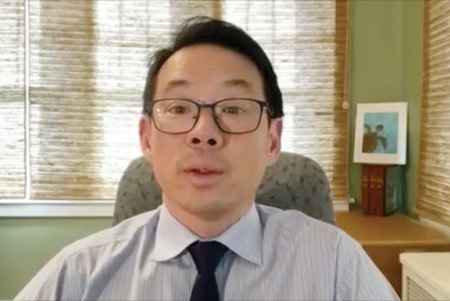
Dr. Sherer: I think there is a great misunderstanding in both groups about what we do, how we do it and the importance of our roles. There needs to be a lot more education in groups of professionals and the lay public about the role of anesthesia and the challenges we face, especially today in light of the shortages we have in healthcare in general.
Dr. Kim: I think if we had anesthesia role models in the public [eye], or say, if Harrison Ford were an anesthesiologist instead of a vascular surgeon in the movie “The Fugitive,” I think you’d get more press. What changes in anesthesia are occurring that surgeons may not be aware of?
Dr. Sherer: One of the major changes is something you’ve already mentioned, and that’s the staffing shortages. You may not be aware that by the year 2030, the number of people over the age of 65 in the United States will double. So, this is a staggering number of new patients in the elderly population. That’s going to put tremendous demands on our already overburdened healthcare system. And the fact that we have an incredible shortage of anesthesiologists and other anesthesia providers is only going to exacerbate the problem. So, in answer to your question, I think that’s the No. 1 thing people need to understand.
Dr. Kim: I’ve read your articles in Anesthesiology News recently, and I was surprised to find out that in 19 states, CRNAs are allowed to deliver anesthesia without anesthesiology supervision.
Dr. Sherer: Yes.
Dr. Kim: As a surgeon, are there questions I should be asking the CRNA if there’s no anesthesiologist to cover my case?
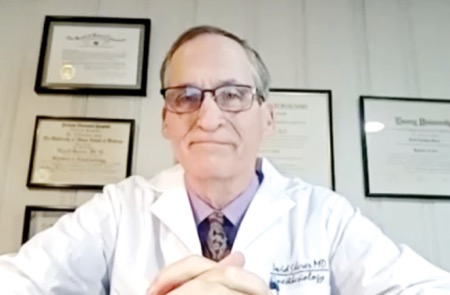
Dr. Sherer: I think one of the primary questions would be: “How experienced are you in giving the particular type of anesthesia for this surgery that I’m doing?” I’ll give you an example. Some nurse anesthetists, or anesthesiologists for that matter, may be much more comfortable taking care of certain types of patients or specific types of procedures such as shockwave lithotripsy for kidney stones or some kind of sophisticated ocular surgery or cardiac ablation for atrial fibrillation and arrhythmias—things that are very specialty oriented. If the practitioner of anesthesia is not well versed or experienced in these types of procedures or patients, I think people can get into trouble.
Dr. Kim: I think having the comfort level to discuss these issues is really important. At my hospital, some of my best friends are the anesthesiologists and CRNAs. Many of the anesthesiologists are former surgeons from other countries who changed specialties when they came to this country. We have lounges where we can talk, drink coffee, eat our lunches together. What else can we do to improve communication and the relationship between surgeons and anesthesiologists?
Dr. Sherer: We’re all there to improve patient outcomes through collaboration and cooperation. It’s very important to try to find common ground among the two specialties, particularly by having an empathy and by walking in each other’s shoes. If we compare surgeons and anesthesiologists, we find similarities and we find some great differences. Both groups are task-oriented. Both like to do what they do, but I’d have to say that surgeons probably like to operate more than anesthesiologists like to put people to sleep. Now that’s a generalization, and it may not be fair, but let’s face it—the bread-and-butter work of surgeons is to operate on qualified patients who need surgery. Anesthesia has jokingly been referred to in the past as the “Department of Preventive Surgery,” in ways that surgeons would feel, well, why are you canceling my case? There can be a conflict of interest in that if you have a fee-for-service model, maybe the impetus and the motivation of the anesthesiologist is greater to do the case than under a salary-based system. I’m not saying that anesthesia people are lazy; I’m not saying that at all. What I’m saying is the classic complaint of the surgeon is “this person canceled my case, and I don’t know why he or she did that.”
Dr. Kim: Talking to surgeons about anesthesiologists, they’ll remember these events and that develops animosity. But in thinking about this, I think recommending that cases get postponed or canceled for patients who cannot have the anesthesia done safely is a brave act. And when the surgeons are chomping at the bit, or the goal seems to be start on time with shorter turnover times and maximize the generation of RVUs [relative value units], I think that’s where we lose sight of what our mission is. I wonder if you think other things can distract the anesthesiologist from their primary task.
Dr. Sherer: Well, there are pressures. First of all, I believe that everyone wants to move toward a goal of better cooperation with each other in terms of anesthesia and surgery. That’s very important because we’re both there for the common purpose of taking care of the patient. But because of certain interdepartmental tensions, there can be some conflicts that arise. I’ll give you an example: I was discussing a case with an old colleague yesterday of a patient who had acute cholecystitis and needed to have his gallbladder out emergently. Now the patient’s hemoglobin A1c was about 8.5; everyone would agree that’s not optimal. But the bottom line is the patient needs his gallbladder out. And with the continuing infection, what’s going to happen is the diabetes management is going to get much worse in that patient. So, what happened was the anesthesiologist canceled the case and said, “I’m not gonna do anesthesia on a patient with a hemoglobin A1c of 8.5.” I can see the surgeon’s perspective: That shows his glucose control over the past three months. This person needs his gallbladder out right now and he’s going to deteriorate. So, can’t you use an insulin drip or other methods to stabilize this patient quickly so that we can get to the task at hand? These are the kind of very difficult questions that arise in the relationships between anesthesiology and surgery, as I’m sure you can appreciate.
Dr. Kim: I remember a case of a patient who had necrotizing fasciitis who needed to go to the operating room, but had hyperkalemia with a potassium of 7. The anesthesiologist said we couldn’t do the surgery until that potassium was corrected, and we could never correct it. That patient died in the emergency room.
Dr. Sherer: Wow. So, these are very difficult questions. I recall a case I did myself of a very elderly and frail gentleman who broke his hip, and we were going to get a hip pinning done for him. But his blood pressure was just too low. No matter what we did, we couldn’t raise his blood pressure. So, I couldn’t safely anesthetize a person either with a spinal or a general anesthetic whose systolic pressure was 80 because the moment I would induce him with any kind of anesthesia, his blood pressure would go through the floor and I would kill him. But the surgeon was very angry or frustrated because he knew the patient needed his hip to be pinned. And so, it was a very bad instance of tension between our two departments.
Dr. Kim: Your articles describe anesthesiologists sort of as the “Rodney Dangerfields of medicine”—they don’t get respect. Why do anesthesiologists feel this way?
Dr. Sherer: Well, I think that we are people who are kind of taken for granted. As you know, we are hospital-based, not clinic-based like surgeons. We usually do not have our own office. We have a presence giving a service, much like radiologists, pathologists and emergency room medicine. So, we are not known with the shingle; we are not known with an office that has a fancy facade; we are not known to the public to be doctors who are out there in the community, out there at meetings promoting what we do and how we do it. We are a service-based industry, and because of that, we have kind of a lurking behind the shadows identity that people really don’t appreciate. That’s number one. Number two is we operate kind of not in the limelight. Literally, like surgeons are at center stage under the lights being handed instruments by assistants. We are in the background sitting behind a screen doing whatever it is that we do, so that there’s a misunderstanding about the role we have and how we do it. That’s why I try to write these articles to really bring an education to the public and our colleagues about the challenges that we face.
Dr. Kim: I don’t really think of anesthesiologists as lurking behind the sheets. I like the idea that the anesthesiologists are sailing a boat and they’re ready for anything, even if it happens rarely. I think the men and women in the field of anesthesia are the quiet healthcare superheroes that surgeons should appreciate.
Dr. Sherer: I appreciate that comment, but you have to also understand the cultural aspects, which I am very ashamed to talk about. When I started anesthesia training in the 1970s, many of the anesthesia practitioners were of foreign extraction and education. A lot of Asian people, a lot of Indian people, a lot of people from other countries who could not “get into other specialties.” And it is a shameful fact in American medicine that these people were treated almost like second-class citizens because they were not “American [medical school] graduates” or the typical Marcus Welby–type American physician. I think that there was a lot of discrimination.
Dr. Kim: That’s interesting you bring that up. It’s probably something that couldn’t be talked about 10 years ago. Like air or ether and the gases, anesthesiologists are invisible, but they’re essential. I’d like to bring the field of anesthesia to the forefront for teamwork we do in surgical care. The surgeons can then focus on their part of the operations and then we can actually cooperate, literally do the surgeries together.
Dr. Kim: One of the things I notice in healthcare is that we’re starting to get dominated by electronic medical records, even in the operating room when we have to monitor the cases. Do you find this to be helpful in taking care of the patients or a distraction from what you really need to do?
Dr. Sherer: I feel it’s a distraction. Now, there’s tremendous value in electronic medical records because it gives us the ability to communicate with each other when it’s set up properly in ways that we couldn’t before. But the constant complaint I hear from patients is, “When I go to the doctor’s office, the doctor doesn’t even look me in the eye. The doctor is clacking on the computer and it’s like, who are you treating, the computer or are you treating me?” So, if we carry this over into the operating room where the construct between patient and doctor is a little bit different, I feel it’s very important—even though we’re entering things into a computer—to maintain the human contact, to look you in the eye, to put your hand on the patient’s shoulder, to touch the patient’s hand, to address the patient in a way so that patient understands that the doctor’s not treating a set of numbers and computers, but a human being sitting right in front of him.
This article is from the June 2023 print issue.
Please log in to post a comment