





Oftentimes in human discourse, when a controversial topic is discussed, there is a natural tendency for the proponent of an argument to avoid offending the audience, for fear of being labeled as prejudiced, or even a “shamer.” Nowhere is this truer than a discussion of health, medicine and body weight. In a day when some patients now hand “please don’t weigh me unless medically necessary” cards to their healthcare providers, it is not difficult to understand how fraught with difficulty a discussion of weight and health has become. At the risk for suffering the very consequences I warn against, I’ll ignore the blowback that I expect to receive and speak what appears to me to be obvious: A high body mass index can make receiving anesthesia in any form riskier for the patient and practitioner alike. And no amount of spin can change that, for the medical literature is rife with evidence of the risks that a high BMI can pose to patients in general, and anesthetized patients in particular.
I deliberately avoided the two “O” words—overweight and obesity—in my title, for fear of alienating readers from the start. But I bear strong conviction that there is a place for sensitive, respectful, yet frank discussion of weight and anesthesia risk, and my hope is that those of us who deliver anesthesia care will agree. Surely, if you have practiced anesthesia long enough, you know the fear and even terror that a severely overweight patient can elicit in you. You know how much more difficult and stress-inducing caring for a high-BMI patient can be. I know this from personal experience, discussions with colleagues and reading the medical literature in a career that spanned 35 years.
In my 2021 book “What Your Doctor Won’t Tell You,” I began the first chapter by stating some revealing statistics. First, the incidence of overweight/obesity in the United States has doubled since 1970. Second, 70% of Americans are either overweight or obese. Third, whereas the average American adult man weighed 150 pounds in the 1960s, today that same person weighs 200 pounds—an increase of 33%. These facts speak for themselves. No amount of rationalization or explanation can alter the truth. I could go into a discussion of why this has happened in America, and indeed the world, but that is not the purpose of this article. (The World Health Organization has declared obesity to be an epidemic, stating that “overweight and obesity are major risk factors for a number of chronic diseases, including cardiovascular disease and stroke, which are the leading causes of death worldwide.”) The conditions that constitute what I semi-seriously called in the book “the mother of all diseases” (a takeoff on Siddhartha Mukherjee’s book title “The Emperor of All Maladies”), often leads to the development of hypertension, diabetes, degenerative joint disease, gastrointestinal disease, cancer, sleep apnea and other pathologies. It is these same pathologies that plague an increasing number of us in the long term and affect us in their acuity when we need anesthesia. That is the focus of this article.
The implications of higher BMIs for our patients and those of us who deliver anesthesia can be divided into the categories: 1) grossly apparent and 2) more subtle. The former are well known to us all and include difficulty in establishing IV access, establishing and managing the airway, positioning the patient, performing nerve blocks, placing central lines, and many others. These basic things we must do daily are almost always made more difficult and riskier as the patient’s BMI rises. The latter category can be thought of in an organ systems approach, as outlined in a great review article titled “Anesthetic Implications of Obesity in the Surgical Patient” (Clin Colon Rectal Surg 2011;24[4]:222-228). Here, the authors take just such an approach when discussing the pitfalls of anesthesia in the high-BMI patient. They cite not only the well-known challenges of airway management but the more subtle respiratory implications such as “decreased chest wall compliance, … decreased lung compliance due to increased pulmonary blood flow and viscosity and … chronic hypoxemia.” If that was not enough to scare you, they go on to elucidate the cardiovascular things to worry about: systemic hypertension, increased blood volume, wall stress on the left ventricle, chronically induced diastolic dysfunction, elevated risk for pulmonary hypertension, propensity for atrial dysrhythmias and right ventricular failure. Once done covering that, they mention the gastrointestinal implications, positioning hazards, pain management and pharmacology (increased sensitivity to respiratory depressant effect of benzodiazepines and other sedatives, difficulty in accurate dosing, and the accumulation of inhalational anesthetics in adipose tissue, leading to a longer clearance time).
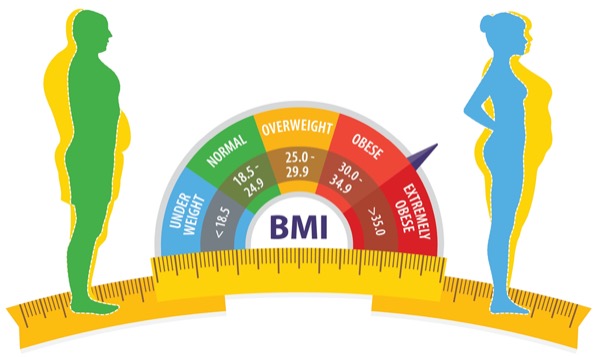
This laundry list of acute challenges in anesthetizing high-BMI patients reflects a snapshot in time of the chronic comorbidities that these patients face. The very same organ systems that bear a heavy burden in overweight and obese patients come into play in anesthetic management, placing the patient at mortal risk and the practitioner at legal risk. One would have thought that with the degree of widespread scientific documentation available to patients and doctors alike—science, not public sentiment—patients would take better care of themselves and physicians would make more noise about the issue. Sadly, that doesn’t seem to be the case. Various people in the public eye with far more influence than my own have attempted to highlight this; think former First Lady Michelle Obama with her initiative on childhood obesity and former FDA Commissioner David Kessler in his 2009 book “The End of Overeating: Taking Control of the American Appetite.” Unfortunately, their noble attempts have gone by the wayside and the problem has only worsened. Instead, we now have the “don’t weigh me cards” and often misguided accusations of shaming.
What can we do as a specialty to bring greater awareness to the issue? The American Society of Anesthesiologists has made an attempt, with their “Made for This Moment” piece directed at anesthesia risk and high BMI (bit.ly/3IZVnml). Even the pharmaceutical companies are involved, as evidenced by Novo Nordisk’s support for the sensitive and helpful informational link for patients at truthaboutweight.com. We doctors should also lead by example. But again, I delude myself. An article titled “Are Obese Physicians Effective at Providing Healthy Lifestyle Counseling?” notes that 44% of male physicians are overweight and 6% are obese (Am Fam Physician 2007;75[5]:738, 741). That article was written in 2007. I suspect the percentages are higher today.
However, instead of doing the hard work required of most high-BMI patients (fewer calories, more physical activity and other lifestyle changes) we continue to look for the quick fix. I understand and appreciate that obesity is a disease and that weight control has become exceedingly complex in many cases. Genetics, personal endocrine profile and even culture all play their roles. But in a society that is now reporting more cardiovascular events (like stroke) in increasingly younger people and a higher incidence of colon cancer (allegedly from inactivity and poorer diets) in the same demographic, we can certainly do better than “don’t weigh me” cards, the seemingly runaway off-label use of non-insulin diabetes injectables to force weight loss (the long-term effects of which are not yet known) and other “easy” shortcut methods.
Dr. Sherer is a retired anesthesiologist and an author. His book “Into the Ether” was published in 2021.
Editor’s note: The views expressed in this commentary belong to the author and do not necessarily reflect those of the publication.
This article is from the July 2023 print issue.
Please log in to post a comment
Obesity as a disease will ultimately get it approved as a factor which will, by itself, be a qualifying condition for social security disability. Get fat and get paid !