






‘I will remember that there is art to medicine … and that warmth, sympathy, and understanding may outweigh the surgeon’s knife.’—The Hippocratic Oath
The intensivist sits down across from my mom and me. It’s been two weeks since my dad unexpectedly had an out-of-hospital cardiac arrest. He was healthy and active, with zero risk factors for heart disease. He scoots a little closer and leans in.
I know what this is. I know what all of this is and that’s the problem. I know why his bilirubin is climbing. I know why he’s still on pressors. I know why he still needs dialysis.
He clears his throat. “I just thought we could chat for a few minutes about everything going on. How are you two holding up?”
He’s good, beginning with the priorities and concerns of the family. However, I hate it. I feel like the patient. Actually, I had felt like that for most of the day. Not that care had shifted away from my dad—only that my mom and I had become integral parts of the treatment plan.
I thought back to medical school when we were taught basic bedside manner through simulated patient encounters, like some kind of bizarre medical cosplay. As students, the exercise created a very black-and-white landscape with clearly identified patients and doctors. But right now, in this chair, in this room, I am keenly aware that I am the patient receiving treatment. I am being given time, information, space and sympathy.
“Let’s summarize what’s happened the last few days.”
I’d rather not. I already know every lab, every drip rate. Summaries exist somewhere between the narrative and the conclusion.
…
That conversation was five months ago. I push the thoughts back as I focus on the conversation in front of me. I make a mental checklist—chairs in a circle, tissues on the table. My patient’s daughter is in front of me, and her mom’s nurse and palliative care doctor are on my left and right.
“Let’s start with what happened today.”
This is different. I am different. I am hyperaware of my words. The heaviness in the room is familiar.
“At this point in time, I don’t see a pathway towards a meaningful recovery.”
There it is—my neat, concise summary statement. But this is her moment, not my moment, and I want to protect that. She needs information, space, time and … empathy. I realize I don’t have a clue how to use empathy.
The term “treatment team” fits nicely within that black-and-white landscape of medical education. But even though I am part of this treatment team, I have more in common with the person sitting across from me. In fact, a piece of me is sitting there beside her. They teach you the words to say in moments like this. Things like “there is nothing more we can do,” or “we will do everything we can to support you and your family.” They are well-meaning phrases stripped of experience—experience that we now share.
This is her moment. I shut the door to the family room, but there’s no closure in the sound. Everything is different. I feel different. Medicine is different. Surgery is different. Whatever I had before—call it emotional detachment, compartmentalization, dissociation, whatever—is gone.
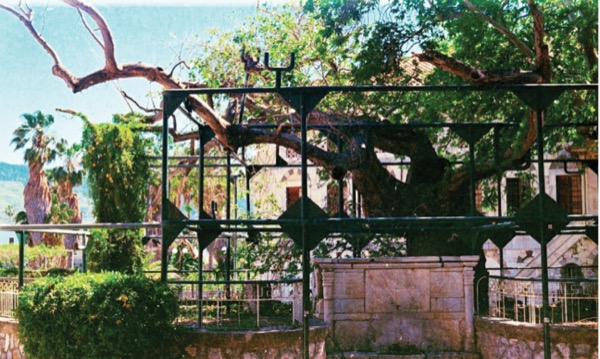
Two months later, I found myself with my wife in Kos, an island of Greece near the coast of Turkey. Here on this island, Hippocrates lived and taught. In the center of the town, surrounded by Byzantine-style buildings, stands an aging plane tree. Tradition has it that Hippocrates taught his students there, underneath the shade of a much earlier tree. The tree itself appeared to be in a state of thriving and dying all at once. Its base was completely rotted out, but miraculously there was still growth at the tips of its ancient branches. All around it, metal scaffolding supported its dying limbs.
I imagined this great Father of Medicine sitting against a stronger version of the tree, advocating for the compassionate and ethical care of patients. Because of him, empathy became foundational to the art of medicine. It is understanding the shared brokenness of the human existence and being open to share in those emotions and experiences.
For many reasons, empathy has been slipping in modern medicine. For starters, medicine has become a business and the delivery of care almost transactional. Hospitals reward productivity, efficiency and cost savings, none of which capture the human element of care. Diagnostic technologies have largely replaced physical exams, further distancing physicians from patients. The list goes on. For decades, these changes have slowly eaten away at the foundation, leaving behind a shelled-out healthcare system needing to be propped up.
Personally, I am relearning how to bring these human connections back into my practice. I have learned that this requires more vulnerability on my part. In the process, I am redefining my boundaries. Hospitals are full of patients in the most unlikely places; they can look like nurses after a difficult shift, family members in the waiting room or residents after a surgical complication. The potential for healing is literally everywhere, including myself. We all had to write letters about why we wanted to be doctors. I was told to focus on my intellectual curiosity of the field and desire to be a lifelong learner. But none of that was true. It was because I wanted to help people. We all did.
It’s time to go back to my roots.
Dr. Halgas is a general and burn surgeon in San Antonio. He is an editorial advisory board member of General Surgery News.
This article is from the August 2024 print issue.
Please log in to post a comment