
The use of whole blood (WB) resuscitation among trauma patients can result in significant reduction in the risk for venous thromboembolism (VTE), according to a study presented at the 2024 Annual Scientific Assembly of the Eastern Association for the Surgery of Trauma.
“This study adds to the growing body of evidence that WB confers equal, and possibly improved, outcomes for bleeding trauma patients,” lead author Brittany Hout, PA-C, a physician assistant with the U.S. Navy in Coronado, Calif., told General Surgery News. “VTE risk reduction with WB could be another potential benefit to make it the resuscitation strategy of choice.”
Currently, WB resuscitation is the standard of care for resuscitation in the military. But few studies explored the risk for VTE among patients who receive WB transfusions.
The multi-institutional retrospective study sought to clarify how different balanced resuscitation strategies affected the risk for VTE among patients reporting to two American College of Surgeons Level I trauma centers.
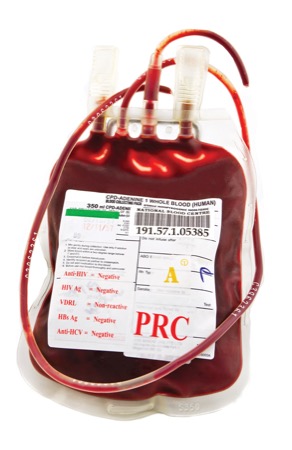
Patients aged more than 15 years who were admitted to one military and one civilian trauma center from January 2016 through December 2021, and who received at least one unit of emergency-release blood product, were included in the study. Patients who received WB resuscitation were compared with those who received component therapy as red blood cells, platelets or cryoprecipitate.
A total of 3,468 patients met the inclusion criteria: 1,775 in the WB cohort and 1,693 in the component arm. The patients who received WB were younger, had higher rates of penetrating injuries, were more frequently transported via helicopter and had higher Injury Severity Scores. The WB patients were more likely to receive tranexamic acid (TXA), VTE chemoprophylaxis within less than 48 hours and had lower rates of 30-day survival.
Overall, while VTE incidence was similar between the two groups, logistic regression found that the use of WB as part of an early resuscitation strategy was associated with a 30% reduction in VTE.
The study also found that TXA exposure was independently associated with a 2.5-fold increased VTE risk among these severely injured trauma patients.
Hout and her co-authors noted this finding shows that the empirical use of TXA should be done with caution in the setting of early WB resuscitation.
“Further analysis is needed to fully understand and make conclusions on this finding,” she said.
Andrew D. Fisher, MD, a general surgery resident at the University of New Mexico School of Medicine, in Albuquerque, who acted as a discussant during the paper presentation, commented that the “study is an important addition to the current trend towards using low titer group O whole blood [LTOWB] for trauma resuscitation.
“The published literature over the past decade on the use of LTOWB has focused on survival, whereas little has been done for the understanding of adverse events and risks associated with its use,” he added. “It is important to continue to evaluate adverse events that may be associated with LTOWB.”
Dr. Fisher noted that the study highlights the need for more robust, prospective, interventional trials to assess risks and benefits in an intentionally balanced trauma population.
“Frequently, we find that it takes years to understand the risks and benefits of many of the interventions we perform in medicine,” he said. “Oftentimes, these findings are only later detected through multiple study designs and use of large populations to assess. Several studies are underway or developing that will hopefully provide us more answers.”
Hout, too, noted the importance of additional research.
“There were several questions raised which may benefit from future research,” she said. “Given the results, future studies should aim to elucidate why the use of WB is associated with less VTE, and if there are actionable factors that decrease the VTE risk in patients who only receive component therapy. Additionally, further research should investigate TXA exposure, including TXA dose and timing, in association to increased VTE risk in trauma patients transfused with whole blood versus component therapy.”
Dr. Fisher and Ms. Hout reported no relevant financial disclosures.