
SAN FRANCISCO—Ever increasing in popularity, subtotal cholecystectomy offers surgeons a viable and attractive surgical option in difficult cases where complete removal of the gallbladder may pose significant risks, including bile duct injury. Nevertheless, as Alex M. Roch, MD, MS, recently discussed at the 2024 Clinical Congress of the American College of Surgeons, larger studies with increased follow-up are needed to assess the long-term outcomes and implications of the practice.
“Partial cholecystectomy has been in existence for a long time,” began Dr. Roch, an assistant professor of surgery at Indiana University School of Medicine, in Indianapolis. “But subtotal cholecystectomy, in the way we know it, was first described by Strasberg and colleagues in 2016 [J Am Coll Surg 2016;222(1):89-96]. Since then, there have been very few data on the long-term outcomes of the procedure.”
Perhaps not surprisingly, the main long-term complications of subtotal cholecystectomy have been biliary. Most recently, a 2024 study found an overall complication rate of 3.7%, but earlier research found complication rates as high as 24% (Surgery 2024 Oct 1:S0039-6060[24]00652-4).
“Most commonly it’s described as 2% for retained stones, with about half of them being symptomatic at some point, and about 2% for choledocholithiasis,” Dr. Roch noted. The rate of completion cholecystectomy has also proven variable in the literature, ranging from less than 1% to as high as 8% in some trials.

The two approaches to subtotal cholecystectomy are fenestrating and reconstituting, which yield different long-term outcomes, according to a 2017 Dutch trial (J Am Coll Surg 2017;225[3]:371-379). That investigation found that 17.8% of patients undergoing a reconstituting approach had recurrence of biliary events, significantly higher than the 8.9% of those with a fenestrating approach. In contrast, the rate of completion cholecystectomy was 4.1% in reconstituting patients, significantly less than the 8.8% in fenestrating patients. A 2021 study from the United Kingdom, on the other hand, favored reconstituting subtotal cholecystectomy, with fewer retained gallstones, biliary events and a lower rate of completion cholecystectomy (Surgery 2021;170[4]:1014-1023). That study also indicated that laparoscopic subtotal cholecystectomy may result in a lower incidence of retained gallstones, biliary events and completion cholecystectomy than open surgery.
Studies have also investigated the effect of calculi left in remnant gallbladder, particularly a 2019 publication that examined 59 patients undergoing subtotal cholecystectomy (HPB [Oxford] 2019;21[4]:508-514). That investigation found a long-term complication rate of 40% in patients with a remnant gallbladder left in place, compared with 0% among those without a visible remnant.
“They went further and described the size of the remnant gallbladder on an MRCP [magnetic resonance cholangiopancreatography] as a predictor of long-term complication,” Dr. Roch noted, “and described their cutoff at about 2.2 cm.”
Another aspect of long-term outcomes after subtotal cholecystectomy, although one that’s not often considered by surgeons, is the potential for malignancy. “It’s not common, but it happens, and it’s been described in case reports,” Dr. Roch said.
In the 2021 U.K. meta-analysis, the authors reported a malignancy rate of 0.2% in specimens from completion cholecystectomy. “Now, that in and of itself doesn’t seem like very much,” Dr. Roch said. “But by my calculations, that could be as many as 200 cases of gallbladder cancer that could be actually diagnosed in the [United States] alone as part of remnant cholecystectomies.”
The cancer rate after subtotal cholecystectomy also may be artificially low, for several reasons. First, long-term surveillance after subtotal cholecystectomy is generally not performed. In addition, most community physicians are not aware of a remnant gallbladder after subtotal cholecystectomy. Finally, most remnant gallbladder cancers are likely to be unresectable due to proximity to vessels.
Research has also examined patients’ quality of life following subtotal cholecystectomy. Most recently, a Cleveland Clinic study compared quality-of-life measures after both reconstituting and fenestrating ap-proaches, using an abbreviated Gastrointestinal Quality-of-Life Index. In a total of 218 subtotal cholecystectomies (113 fenestrating, 105 reconstituting), the study found comparable rates of bile duct injury, bile leak and 30-day readmission for the two approaches. Similarly, there was no difference in quality of life between the two groups at five years after surgery (Surgery 2024 Oct 1:S0039-6060[24]00652-4).
“Similarly, the 2017 study from the Netherlands compared fenestrating and reconstituting subtotal cholecystectomy with conversion to open cholecystectomy, [and] found absolutely no difference in quality of life between the three,” she added. “All are good options; it just depends on what you’re familiar with.”
As Dr. Roch discussed, subtotal cholecystectomy has become increasingly popular as a bailout option over the years, to the point where it is performed more commonly than open surgery.
“Subtotal cholecystectomy is much better than having a bile duct injury,” she said. “But there’s a paucity of data on long-term outcomes after the procedure, so larger population studies and more follow-up are needed to actually see what long-term consequences arise from this new practice.”
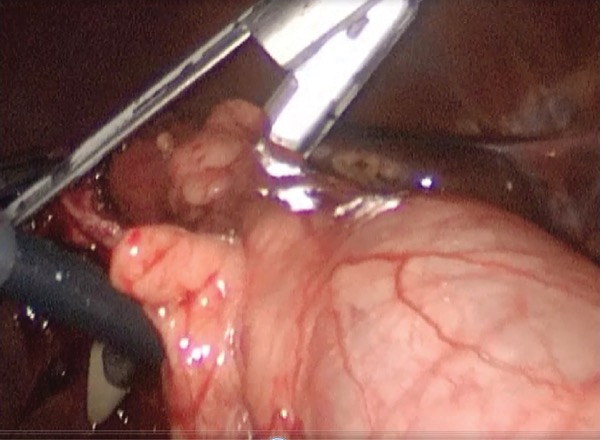
At any rate, the key to success with the procedure is that it’s performed properly.
“It cannot be just like a fundectomy or a partial cholecystectomy,” Dr. Roch explained. “And remember that it’s perfectly fine to do a reconstituting subtotal, as long as you need to extract all the stones before closing your remnant. Finally, your remnant needs to be small. It cannot be a 7-cm remnant—that’s called a gallbladder.”
Session co-moderator Dana A. Telem, MD, MPH, the Lazar J. Greenfield Professor of Surgery at University of Michigan Health, in Ann Arbor, said one of the biggest, most important concerns raised by the presentation is whether surgeons are actually performing too many subtotal cholecystectomies, particularly in clinical situations where the procedure may not be warranted.
“In this era, especially with younger patients, we need to determine the trigger to convert to a subtotal, because I wonder if we’re moving the needle and maybe converting too early and then leaving patients with potential problems downstream,” she said. “With that in mind, we need to right-size utilization of subtotal cholecystectomies, and at the same time, make sure we’re training surgeons who feel comfortable and confident doing complete cholecystectomies and only use this as a bailout.”
Although Dr. Telem acknowledged that it’s easy to be a “Monday-morning quarterback,” she said some of the videos she’s seen on various websites and YouTube have made her question some of the situations in which surgeons chose to perform a subtotal cholecystectomy.
“It certainly looks, at least to the trained eye, that something else could have been done and there’s a lot of gallbladder being left in place,” she said. “It almost makes me wonder what the repeat cholecystectomy rate is going to be in these patients.”
Drs. Roch and Telem reported no relevant financial disclosures.