
There is little disagreement that healthcare is in a state of flux and uncertainty. While quality has become an oft stated goal of healthcare provision, the COVID-19 pandemic, government delays in addressing fiscal imbalance, physician burnout, and physician and staff shortages have delegated providing quality care to more of a tagline.
Our communities are suffering limitations in access to care and continuity. Patients are more commonly traveling to distant cities and states to seek the care they used to have access to in their communities. Surgeons in referral centers will attest to the growing burden of transfers from outlying hospitals that have either limited surgical coverage or a surgeon who is “not comfortable” managing complex care, whoever is the arbiter of what “complex” means.
While we pride ourselves in America on our capitalist and free-market ideals, reliance on government funding leaves us dealing with a dichotomy of socialism and capitalism in healthcare. Healthcare organizations are left with the high costs of navigating these complexities. A commitment to one model or the other would allow either government policy or the free market to sort things out.
Doctors have responded to this uncertainty by taking less ownership of their practices in favor of flexibility. That flexibility allows them to have more perceived control of their lives and well-being. In addition, faced with shortages, systems and hospitals are offering far more attractive compensation packages to lure doctors away from existing practices. In many instances, doctors have become itinerant workers.

The American College of Surgeons was formed in 1913, partly in response to an unregulated environment where itinerant doctors provided care without oversight and, in some cases, without adequate training. While great progress has been made in training and oversight, it seems we have returned to a world where surgeons and doctors are less inclined to dig in and grow roots in a community.
The slow death of private practice and negative connotations regarding “community surgeon” have contributed to this trend. Aspiring to be an academic surgeon is promoted by academia. Being “just” a general surgeon has become a symbol of failure or lack of ambition. I heard this “just a general surgeon” far too many times from students and trainees as a residency program director. Very few programs graduate surgeons who go into community practice at a time when communities need surgeons more than ever. Our training models are not in line with our community needs.
When a surgeon of any specialty, or any doctor, goes into practice they invest in that community. They literally spend money in some form to either purchase assets or a share of preexisting assets. This creates a bond that forces that surgeon to then work harder to resolve conflict and ensure a better care and practice environment. They have a home, and often a family with children in schools. They often become leaders in community efforts and organizations. Regardless of whether they are academic or fully private, they become a part of the community that is not easily replaced.
An employed surgeon, on the other hand, comes in on a salary. While they also may make ties and investments in the community, they are not invested financially in their career to the same degree. When their employer or their situation presents them with challenges, the job search ensues, and they are more apt to move on to where the grass may appear greener.
Making matters worse is the vast expansion of locums tenens coverage that is billed as a solution to physician shortages. This is all akin to a street performer moving the ball around in three cups. The communities are left guessing where the ball will be, often losing their investment. Shifting doctors into locums roles only exacerbates shortage issues, as these doctors often have protected shifts. These shifts then create a demand for additional surgeons to cover 24/7/365 healthcare. What one community surgeon would once provide a hospital for free, now three to five doctors and millions of dollars are needed to cover. In addition, continuity and follow-up care are often left poorly addressed.
This also exacerbates an income disparity between surgeons who have invested in a community and those who are just passing through. Hospitals often shift call pay to the temporary surgeon and away from the community surgeon they are trying to either compete with or eliminate. This only makes matters worse for the community.
While protecting our well-being is indeed a critical goal, some of the solutions to our healthcare problems are only making problems worse. Doctors who have spent years in training with hundreds of thousands of dollars in debt can hardly be blamed for taking jobs that offer financial and lifestyle protections. Well-intended healthcare systems solved one problem and created many others. Consolidation and purchase of private practices and monopolizing markets may have offered chances to streamline cost and care, but ultimately it left us with a less committed and less productive workforce. Added to this is our nation’s shortcomings in addressing physician shortages decades ago, creating a terrible storm. Competition has been diminished and communities suffer.
Although we are taught in training to take ownership of our patients, we abandon this concept in choosing our jobs. In order to truly take ownership of our patients, we must also take ownership of our communities. It doesn’t matter whether one is academic, employed or in private practice. Committing to a community creates a front line of doctors willing to find solutions to local healthcare problems and maintain that with continuity.
Doing this, of course, requires protections. First and foremost, restrictive covenants should be banned nationally for physicians. This practice has given large corporate healthcare entities the leverage in settling physician matters. If we are not happy with our jobs, we are forced to abandon our communities if we expect change. If we were allowed to stay and vote with our feet, just like any other industry in a capitalist model, we would have more leverage to settle matters important to us. Surgeons taking their patients to a competitor is the dreaded fear of any system. Hospitals have to relearn how to work with community physicians.
We also must address shortages in funding and training surgeons and doctors. Government must decide whether healthcare is going to function in capitalist or socialist models. Currently, we have the pressures of investing in practices and taking on liability in a capitalist model, while being limited with price fixing and regulatory hurdles to expand the workforce in a socialist model. More young talented people would pursue healthcare if the rules were more transparent. Either allowing supply-and-demand economics to direct physician pay or government fully funding medical training would have a positive effect. I am not championing a particular solution but rather am arguing that we need solutions that are consistent with an overall model.
My call for action is a request that surgeons rethink their roles within the profession and take ownership of being a community surgeon, regardless of how they are employed. The label should be elevated to connote ownership of patients, pride in profession and determination in successful longitudinal quality care provision.
The next time things get hard at your job, try something different. Try staying. Be a community surgeon.
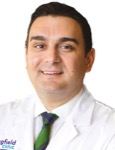
Dr. Tsoraides is a colorectal surgeon at Springfield Clinic, in Peoria, Ill.
Editor’s note: The views expressed in this opinion belong to the author and do not necessarily reflect those of the publication.