
ORLANDO, Fla.—Fasted diabetic surgical patients taking glucagon-like peptide-1 receptor agonists (GLP-1 RAs) present with significantly greater residual gastric volumes and risk for a full stomach, a new study has found. The investigation also showed that GLP-1 RA use within seven days of surgery was associated with significantly increased gastric volumes relative to holding therapy for more than seven days—a finding that the researchers said supports current consensus-based guidelines.
“We’ve had several cases recently where patients on GLP-1s regurgitated under anesthesia,” said Chris Wolla, MD, an assistant professor of anesthesia and perioperative medicine at the Medical University of South Carolina, in Charleston. “As a result, we began performing gastric ultrasound on all our patients taking these drugs, to see if there was any correlation with gastric volume.
“That eventually evolved into this study, where we decided to look specifically at diabetic patients, who may also be experiencing some level of gastroparesis,” he added.
The prospective, observational cohort study comprised 206 patients, of whom 106 were using GLP-1 RAs; the remaining 100 served as controls. The primary outcome was gastric volume, assessed via gastric ultrasound, in the right lateral decubitus position. Secondary end points included the presence of a full stomach (solids/thick liquids, or clear fluid >1.5 mL/kg), the need for surgery delay, Perlas grade and the occurrence of intraoperative aspiration. Finally, the researchers examined the effect of GLP-1 type, duration of drug use and timing of last dose on gastric volume.
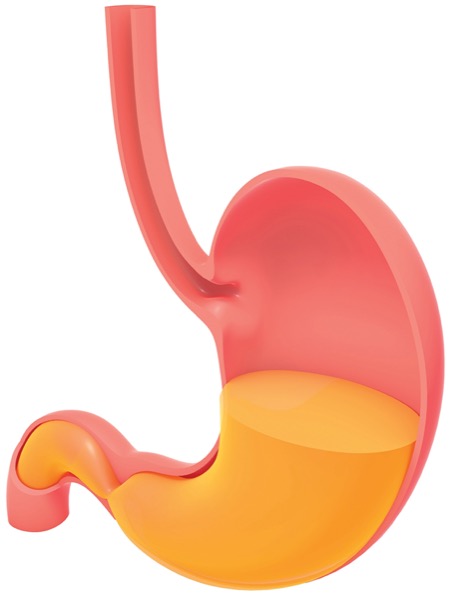
Presenting at the 2025 annual spring meeting of the American Society of Regional Anesthesia and Pain Medicine, Dr. Dr. Wolla said diabetic patients taking GLP-1 RAs had a median gastric volume of 0.61 mL/kg, significantly greater than the 0.16 mL/kg observed in their counterparts not taking the drugs (P<0.001). Similarly, patients on GLP-1s also had a significantly increased odds of presenting with a full stomach (odds ratio [OR], 11.3; 95% CI, 5.2-24.7; P<0.0001). GLP-1 RA use was also found to correlate with higher Perlas grades (P<0.001).
“When we initiated the study, there was no recommendation from any of the national societies about stopping GLP-1 use prior to surgery,” Dr. Wolla said in an interview. “But partway through the study, the ASA came out and said that patients taking these drugs needed to hold them for one dose, either a day or a week, depending on which formulation they were taking. Once that happened, we decided to see if the duration of holding the medication made any difference in terms of gastric volume in the GLP-1 group.”
These analyses revealed that gastric volumes were 0.2 mL/kg in controls, 0.5 mL/kg in patients who stopped their drugs at least 14 days prior to surgery, 0.4 mL/kg in those stopping their drugs seven to 14 days before surgery and 1.2 mL/kg in those who stopped the drugs within seven days of surgery (P<0.001). No differences in diabetes duration were observed between groups.
As Dr. Wolla pointed out, the 1.2-mL/kg gastric volume observed in patients who stopped the drug within seven days of surgery, while concerning, was less than the 1.5-mL/kg benchmark for what many clinicians and societies consider to be a full stomach.
“Nevertheless, the data are definitely showing that patients on GLP-1s have a significant degree of delayed gastric motility or delayed gastric emptying,” Dr. Wolla explained.
Previous research, he added, found that surgical patients presented with a baseline gastric volume between 0.3 and 0.5 mL/kg. “So, it’s definitely abnormal to have it that high, and it’s definitely concerning.”
Based on these findings, the investigators recommended that patients with diabetes taking GLP-1 RAs who are scheduled for surgery should hold their medications for at least seven days before, although with a caveat.
“The recent multi-society guidance says that if anesthesiologists have a high level of concern for increased gastric volume, they can take other steps to mitigate those risks,” Dr. Wolla said. “This includes patients taking a clear liquid diet for 24 hours prior to surgery, which differs from standard NPO [nothing by mouth] guidelines.”
Dr. Wolla typically performs gastric ultrasound in patients taking GLP-1s who present with potential risk factors for gastroparesis.
“If I find solids or thick liquids, then it becomes a shared decision-making process with the surgeon, proceduralist, patient and the anesthesiologist,” he added. “If there’s urgency, there are other ways to mitigate the risk, such as doing a rapid sequence induction and choosing general anesthesia over sedation, so there’s no risk of an unprotected airway.”
Anahi Perlas, MD, a professor of anesthesia at the University of Toronto, said the study adds to a growing body of literature suggesting that use of GLP-1 agonists may be associated with a full stomach despite standard fasting intervals.
“This poses questions for anesthetic and perioperative management, which is currently controversial,” she commented. “The initial recommendation from the ASA, back in 2023, was to hold these drugs for at least a week for those on weekly dosing. However, due to a number of concerns, guidance published in 2024 recommends continuing the GLP-1 agonists throughout the perioperative period and instead asking these patients to fast for solids for 24 hours and for clear fluids for four hours before surgery.
“Given that the baseline risk of aspiration of gastric contents in the perioperative period is very low, it is difficult to build robust data and strong guidelines, and existing recommendations are mostly based on case reports, indirect physiologic data and expert opinion,” Dr. Perlas added. “I think the jury is still out on this one and we will likely see more developments in the next few years.”
Dr. Perlas reported financial relationships with Fujifilm Sonosite and SonoSim. Dr. Wolla reported no relevant financial disclosures. The research was published in the Journal of Clinical Anesthesia (2025;104:111853). The abstract was selected as the best one presented at the meeting.