

CHICAGO—Acute lower gastrointestinal bleeding is common, resource-intensive, and often unpredictable. However, it is also increasingly manageable with coordinated, evidence-based care.
During a session held at the 2025 Clinical Congress of the American College of Surgeons, a series of experts walked attendees through an integrated approach to the initial resuscitation, diagnostic imaging, procedural interventions, and long-term management of recurrent or chronic bleeding.
Inpatient Management of Acute Lower GI Bleeding: A Team Sport
The opening presentation, originally prepared by David Carr-Locke, MD, and delivered by his colleague Alessandro Fichera, MD, the chief of the Colon and Rectal Surgery Division at NewYork-Presbyterian/Weill Cornell Medicine, in New York City, framed inpatient lower GI bleeding management as inherently multidisciplinary.
“Inpatient management of acute lower GI bleeding is a team sport,” Dr. Fichera said. “The key to success is indeed to have a team that works well together. There is no turf war or trying to deviate from the standard of care.”
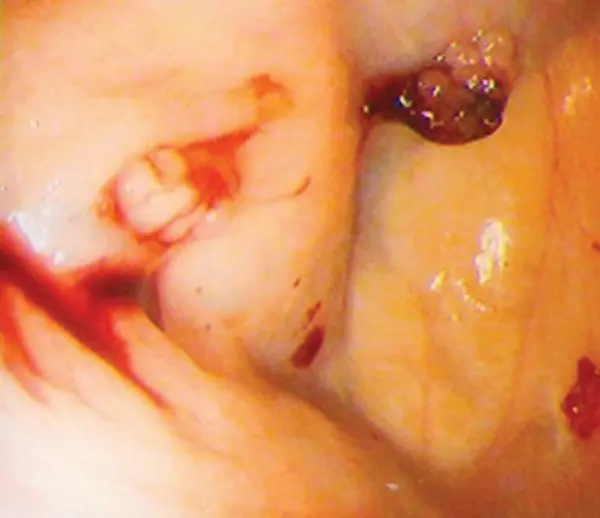
Acute lower GI bleeding, Dr. Fichera noted, is far from rare, resulting in approximately 360,000 annual ED visits in the United States, the equivalent of seven Yankee Stadiums full of patients. Additionally, about 100,000 of those patients are admitted annually, with inpatient mortality ranging from 2% to 4%, and much higher in those requiring four or more units of blood.
Most cases are driven by diverticular bleeding and post-polypectomy hemorrhage, with an important minority involving an upper GI source. Contemporary guidelines from the American College of Gastroenterology and the American Society for Gastrointestinal Endoscopy now emphasize:
- resuscitation first, with early risk stratification
- CT angiography (CTA) as the initial diagnostic imaging for significant hematochezia
- elective colonoscopy in patients with milder bleeding or once bleeding has subsided
“In their guidelines, they point out that those [medical reversal] agents do not change the outcome in the acute severe setting,” Dr. Fichera said, underscoring that patients with severe hematochezia need “their hemorrhage control now, not in an hour, not in six hours, not in 12 hours.”
If CTA shows no active extravasation, “elective colonoscopy is indicated,” Dr. Fichera said. If extravasation is present, options include interventional radiology or urgent colonoscopy in centers with expertise and the ability to quickly prep the bowel.
Risk stratification is also evolving, and Dr. Fichera highlighted the use of the Oakland score, which incorporates age, sex, prior lower GI bleeding admissions, blood on rectal exam, and signs of active bleeding.
“The Oakland score is a good way to stratify these patients, and it’s very simple to calculate,” he said.
For admitted patients, a key decision remains whether to go straight to CTA or proceed to urgent colonoscopy in centers with advanced endoscopy capabilities. In practice, Dr. Fichera said, institutional resources and expertise must drive these real-world decisions.
When Surgery Is the Last Port In the Storm

Kimberly A. Davis, MD, a professor of surgery at the Yale School of Medicine, in New Haven, Connecticut, focused on the subset of patients with hemodynamically significant bleeding who cannot be stabilized with resuscitation alone.
“The management of lower GI bleeding is a multidisciplinary approach,” she said. “I’m going to focus on the hemodynamically unstable patient, because in the patient population that cannot be resuscitated, surgery becomes the last port in the storm.”
Initial management mirrors trauma resuscitation, with emphasis on early blood product use and avoidance of large-volume crystalloid.
“Adequate IV access is mandatory,” Dr. Davis said. “I would, however, emphasize permissive hypotension … You don’t want to over-resuscitate these patients because theoretically you can exacerbate the bleeding with over-resuscitation.”
Any significant lower GI bleeding also demands an assessment for an upper source.
“I would like to emphasize that 15% of patients that present with a clinically significant lower GI bleed actually have an upper GI bleeding source,” Dr. Davis said. “And whether you assess for an [upper] GI bleed with a nasogastric tube looking for bilious aspirate, or you do it with a quick EGD [esophagogastroduodenoscopy], it absolutely has to be done.”
In 2025, she argued, CTA has become integral to decision-making in unstable patients. “A positive CTA in a hemodynamically unstable patient who does not respond to resuscitation localizes the site of bleed and allows me to perform a segmental colectomy,” she said.
In hospitals where endoscopy and interventional radiology are available, most patients can avoid the operating room. Still, surgeons remain essential as the ultimate backup, particularly when around-the-clock IR or advanced endoscopy are not available.
“We are the management team for lower GI bleeds when all other therapeutic options have failed,” Dr. Davis said. “It is ideal that you localize the site of the bleeding before you proceed with resection, but if you have to, a total abdominal colectomy is a reasonable way to go.”
In smaller or resource-limited centers, she acknowledged, the threshold for surgical intervention may be lower.
“Surgery is never the wrong answer,” she said. “It’s just the less common answer.”
CTA at the Center: What Surgeons Need to Know

Justin Tse, MD, an associate professor of radiology at Stanford University, in Palo Alto, California, discussed how modern imaging supports this approach, highlighting how much CTA technology and practice have evolved.
Dr. Tse based much of his talk on a pair of recent consensus guidelines, which he and colleagues developed for the American College of Gastroenterology and the Society of Abdominal Radiology.
Most patients with suspected overt lower GI bleeding will undergo a CTA, he said. If results are positive—indicating active extravasation—patients should proceed to therapy via interventional radiology or endoscopy. If results are negative, options include tagged red blood cell scans for ongoing but slow bleeding, or CT enterography in hemodynamically stable patients with suspected small-bowel sources after negative standard endoscopy.
CTA for GI bleeding is not a single-phase study, he emphasized. In fact, he said, the process consists of three mandatory phases:
- non-contrast phase, used to identify sentinel clot, baseline attenuation, and post-treatment changes;
- arterial phase, to identify active extravasation; and
- portal venous (delayed) phase, to increase sensitivity for subtle bleeds and detect end-organ ischemia.
Dr. Tse also reviewed how tagged red blood cell scans and CT enterography still fit into the workup, particularly when CTA is negative but clinical suspicion remains high.
Tagged red blood cell imaging, for example, is “sensitive—as low as 0.04 mL per minute,” but technically demanding and anatomically limited unless paired with SPECT/CT, he said. CT enterography, by contrast, is geared toward identifying the underlying cause of small-bowel bleeding rather than detecting active extravasation.
Of note, Dr. Tse challenged the long-quoted bleeding-rate threshold of CTA. The classic pig model data from 2003 suggested CTA detects bleeding at 0.3 to 0.5 mL per minute. With today’s scanners, that appears outdated.
“Bleeding rate is a very simple calculation,” he said. Using contemporary multidetector CT and modern reconstruction, he said, “we found that the sensitivity of CTA is actually far better now with 0.1 mL per minute or even lower.” As a result, “CTA has become the first-line radiologic studies for most acute bleed indications. This includes both hemodynamically stable and unstable patients at my institution.”
Recurrent Minor Bleeding and Persistent Anemia: When to Operate?

During the final session, Sarah B. Stringfield, MD, a colorectal surgeon at Baylor University Medical Center in Dallas, shifted the focus from dramatic, life-threatening bleeding to the slow, persistent bleeding that drives chronic anemia and repeated workups.
“Lower GI bleeding varies significantly in severity,” she said. “You can have acute bleeding, which we already talked about a lot today, which can be a life-threatening event, and then you can have chronic bleeding.”
Chronic lower GI bleeding, she noted, is “defined as the passage of blood from the rectum over a period of several days or longer, and implies that the blood loss is intermittent or slow.” It is most common in older adults and can be overt, such as visible maroon stool or hematochezia, or detected only via fecal occult blood testing or laboratory findings.
“Iron deficiency anemia is the most common manifestation of chronic GI bleeding,” Dr. Stringfield said. “It’s estimated to account for 50% of all anemias, and it’s associated with symptoms such as lethargy, weakness, dyspnea, and decreased quality of life.”
Workup usually begins with endoscopy, and celiac testing, capsule endoscopy, CT-based imaging, and review of medications (especially NSAIDs, aspirin, and antithrombotic therapy) are also important.
Common causes of lower GI bleeding include colorectal cancer, angiodysplasia, polyps, and various forms of colitis, many of which can be treated effectively with endoscopy and medical therapy.
The harder question—and one that often falls to surgeons—is when to operate in a patient with recurrent minor bleeding or persistent, transfusion-dependent anemia.
“I could not find any specific guidelines on when to perform surgery for chronic lower GI bleeding,” Dr. Stringfield said. “Similar to acute bleeding, surgery is only done if everything else has failed. It’s really considered a last resort, and it’s not very often performed.” If surgery is pursued, a directed segmental resection is much preferred over a total or subtotal colectomy.
Ultimately, Dr. Stringfield emphasized individualized decision-making, supported by tools like the ACS surgical risk calculator.
“Each patient should be evaluated on a case-by-case basis,” she said. Surgeons should “weigh the risk of surgery against that patient’s risk of continued bleeding or re-bleeding,” factoring in age, comorbidities, frailty, prior transfusions, and response to iron therapy and endoscopic treatment.