





By Monica Smith
NEW YORK CITY—The increased use of cross-sectional imaging has led to more incidental findings. At the 2023 Controversies, Problems and Techniques in Surgery symposium, a multidisciplinary team with Montefiore Einstein Medical Center discussed their approach to managing adrenal incidentalomas—the incidence of which have increased 10-fold in the last two decades.
Presentations given by Smita Abraham, MD, an endocrinologist and associate professor of medicine, and John McAuliffe, MD, PhD, an associate professor of surgery, provided an overview of the workup of adrenal incidentalomas and outcomes of patients undergoing adrenal surgery at Montefiore Einstein, in New York City. The center is a high-volume one, having performed more than 120 adrenalectomies over the last seven years. More than 90% of the procedures were minimally invasive and with a 0% mortality rate.

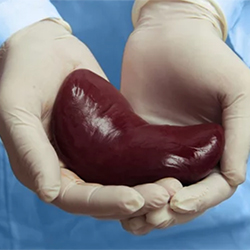
“With these excellent surgical outcomes, we at Montefiore Einstein are able to offer safe surgical treatments to patients with adrenal diseases, even with significant comorbidities,” Dr. McAuliffe said.
Dr. Abraham began the session reviewing the workup of adrenal incidentaloma. “These are lesions 1 cm or greater, now discovered in 5% to 7% of patients undergoing cross-sectional imaging, mainly in adults older than 50,” Dr. Abraham said. “If you see a patient younger than 40 with an incidentaloma, that’s a signal to investigate sooner rather than later.”
Most adrenal incidentalomas are benign adrenocortical adenomas. Malignant lesions are infrequent but include adrenal cortical carcinomas (ACCs), metastases, sarcomas and lymphomas. Pheochromocytomas can be benign but have malignant potential. According to Dr. Abraham, the goal of evaluation of adrenal incidentalomas is to answer two questions: Is the lesion malignant, and is it functional?
Determining Malignancy
Dedicated adrenal protocol imaging is used to determine features of malignancy, with the pre-contrast phase of adrenal protocol CT as the modality of choice, mostly because it allows use of the Hounsfield unit (HU) classification system. “If the HUs are less than 10, the risk of malignancy is nearly zero; 10 to 20, the risk goes up to 2%, and once the HU are greater than 20, the risk goes up to 10% to 20%,” Dr. Abraham said.
Size is another predictor of malignancy; the risk is about 2% in lesions smaller than 4 cm, about 6% in those 4 to 6 cm and about 25% in those larger than 6 cm.
Determining whether a lesion is functional (i.e., producing elevated hormones) requires a hormonal workup since the imaging that determines malignancy cannot discriminate between functional and nonfunctional tumors. “Also, since we’re seeing so many incidentalomas, we’re catching hormonal disorders earlier and many patients don’t have symptoms,” Dr. Abraham noted.
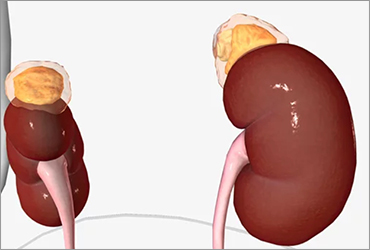
In their evaluation of adrenal incidentalomas, Dr. Abraham and her team look for three types of disorders: cortisol excess (mild autonomous cortisol excess [MACE]/Cushing’s syndrome), primary hyperaldosteronism and pheochromocytoma.
The test of choice for cortisol excess disorders is the 1-mg dexamethasone suppression test (DST), in which the patient takes 1 mg of DST at 11 p.m. with cortisol and dexamethasone levels drawn between 8 and 9 a.m. the next morning. A cortisol level less than 1.8 mcg/dL rules out cortisol excess, 1.8 to 5 mcg/dL is either MACE or Cushing’s syndrome and may warrant further evaluation, and 5 mcg/dL and higher could be an indicator of Cushing’s syndrome.
Surgical management is utilized in patients with Cushing’s syndrome—whether the lesion is benign or malignant. Management of MACE is less straightforward and usually made over time, taking into consideration comorbidities, patient preference and the risk-to-benefit ratio of surgery. “Even though our surgical outcomes are spectacular, we want to avoid an unnecessary procedure, especially in a poor surgical candidate,” Dr. Abraham said.
Primary hyperaldosteronism, a syndrome of autonomous aldosterone production, is one form of hypertension that can be potentially cured, she said. “And we want to do that for whomever possible.”
Testing, Testing
The screening test of choice for primary hyperaldosteronism is plasma renin activity (PRA) and serum aldosterone (a positive screen is suppressed PRA, <1 ng/mL per hour and plasma aldosterone of ≥10 ng/dL). Most patients will need a confirmatory test after a positive screen. If the second test is positive, the next step is determining whether the patient has unilateral or bilateral disease.
“We do this via adrenal venous sampling [AVS], which requires interventional radiology [IR],” Dr. Abraham said. She acknowledged that this can be a barrier, with IR not available everywhere, but it’s an important step because unilateral and bilateral disease are managed differently: the former by unilateral adrenalectomy and the latter with mineralocorticoid antagonists. Patients younger than 35 years of age with a positive diagnosis and unilateral adenoma “can go straight to surgery without AVS,” she explained.
In patients with suspected pheochromocytoma, the test of choice is plasma free metanephrines. “Metanephrines are continuously produced by pheochromocytoma and an accurate measure of tumor activity,” Dr. Abraham said. If the test is negative, pheochromocytoma is highly unlikely, but there are a lot of common medications and other substances that can cause false positives.
“Ask patients to stop everything that they can without putting themselves in danger (noncritical medications, tobacco, caffeine) for at least 24 hours prior to the test,” she said.
Dr. McAuliffe noted that once a diagnosis of pheochromocytoma has been made, the team evaluates the patient for bilateral and/or metastatic disease using imaging including CT of the chest, MIBG (metaiodobenzylguanidine) PET or gallium 68 dotatate PET.
The Montefiore protocol for patients with pheochromocytoma is to initiate a blockade at least two weeks before surgery, often with an alpha-blocker such as doxazosin or phenoxybenzamine. “These medications can be a challenge for patients who can experience orthostatic hypotension and sinus congestion, so we keep a close eye on these patients to ensure compliance and safety,” Dr. McAuliffe said. Patients also undergo two days of preoperative IV fluids in an effort to expand the blood volume. Postoperatively, patients are monitored for volume issues, bleeding and adrenal insufficiency. They are usually discharged on post-op day 1.
For patients with bilateral adrenal incidentalomas, each lesion needs to be evaluated individually to determine whether it’s benign or malignant, Dr. Abraham noted. “Bilateral masses may represent a co-occurrence of different entities,” she explained. “The patient still undergoes identical clinical and hormonal workup as they would for unilateral adrenal incidentaloma and we follow the same decision-making process, but we do try to avoid bilateral adrenalectomy.”
Although it may seem counterintuitive, adrenal biopsy is not common. “It’s tempting to want to biopsy the lesion when you don’t know what it is, but this is really only useful when you’re trying to confirm a diagnosis of metastasis from an extra-adrenal cancer. Further, biopsy cannot determine the difference between benign adrenocortical adenoma and ACC,” Dr. Abraham said.
AVS is also uncommon in patients with bilateral adrenal incidentalomas (in patients who do not have primary hyperaldosteronism) and cortisol excess. “For primary hyperaldosteronism, we don’t rely on imaging but go to AVS whenever we can to ensure we’re taking out the correct side,” she said.
Dr. Abraham concluded her talk with a simple algorithm for the workup of adrenal incidentalomas. “If the HUs are less than 10, we don’t need to order plasma free metanephrines, as pheochromocytoma is ruled out by this imaging characteristic—unless you’re concerned for other reasons. If the lesion is benign with HUs less than 10, size smaller than 4 cm and negative hormonal work, that patient is free to go. We wouldn’t do further workup unless the patient presents again with a change in signs or symptoms.”
Please log in to post a comment
I use these two guidelines in my practice. Are they still valid?
1. Mayo-Smith WW, et al. Management of Incidental Adrenal Masses: A White Paper of the ACR Incidental Findings Committee. J Am Coll Radiol 2017.
2. Expert Panel on Urological Imaging; Mody RN, et al. ACR Appropriateness Criteria® Adrenal Mass Evaluation: 2021 Update. J Am Coll Radiol 2021.