





Originally published by our sister publication Pharmacy Practice News

Speaking at the ASPEN 2023 Nutrition Science & Practice Conference, in Las Vegas, about prolonged shortages of parenteral and enteral nutrition products, Allison Blackmer, PharmD, BCPS, BCPPS, said, “Unfortunately, this is not going to be the most uplifting session. But I hope it will inspire each of you to become involved with advocacy efforts to ensure patient access to nutrition support therapy.
“Shortages are not resolving,” said Dr. Blackmer, ASPEN’s director of clinical practice, quality and advocacy. Referring to the latest report from ASHP and the University of Utah, she said: “What we’re seeing is that nearly every component of parenteral nutrition [PN] has either been on shortage or is currently on shortage, including our supportive therapies and the devices needed to compound and infuse PN. Enteral nutrition has an equal number of problems.”
ASPEN has embarked on gathering data regarding the extent and severity of nutrition access issues through a series of surveys. The first survey, which assesses PN access issues, including impact on patient care and safety from the provider perspective, has been completed. During an ASPEN session, Dr. Blackmer unveiled a preliminary analysis of the results, based on responses from about 350 pharmacists, dietitians and other nutritional support providers. Complete results will be forthcoming in a future publication. A few initial, preliminary and unpublished findings are:
- 72% of respondents reported shortages of macronutrients, including amino acids and IV lipid emulsions, while 91% said micronutrients have been or are currently in short supply.
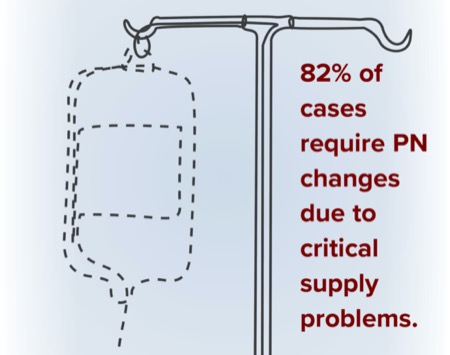
- 82% said they have had to modify PN therapy due to a shortage, which included omitting or substituting components, attempting use of oral nutrients, or diet modification. Fifteen percent reported avoiding use of PN because of shortages. (“If you are one of those 15% of patients that require PN for life, it’s pretty astounding to see that 15% of our respondents are saying they had to avoid that,” Dr. Blackmer said.)
- 57% said shortages cause adverse events, including two reported deaths. (Dr. Blackmer noted that the deaths were based on survey responses and not documented.)
“If we take a look at the whole parenteral nutrition use cycle,” Dr. Blackmer said, “the way I see it is that every aspect of providing parenteral nutrition—from indication screening for parenteral nutrition to prescribing, compounding, administering, monitoring and everything in between—has a point of vulnerability and an issue where we’re seeing shortage and access problems. This is really part of this crisis today.”
Challenges in Mounting A Proactive Response
During a second ASPEN session, other speakers weighed in on the persistent challenges of shortages for their institutions and the often imperfect methods they used to meet their patients’ nutritional needs.
Andrew Mays, PharmD, BCNSP, CNSC, FASPEN, FASHP, talked about the challenges of dealing with the constantly shifting PN shortage terrain at the University of Mississippi Medical Center, in Jackson, where he is a clinical pharmacy specialist in nutrition support and a clinical assistant professor at the University of Mississippi School of Pharmacy, in University. “I try to be as proactive as possible,” Dr. Mays said, “but it is pretty hard.”
In the midst of an amino acid shortage several years ago, Dr. Mays recalled how he tracked, to the gram, the amount of protein he used daily to compound PN. The last thing he wanted to do, he said, was to have to open another bag for 25 or 50 mL of amino acid solution and waste the rest. “I never thought I would be doing that in practice.”
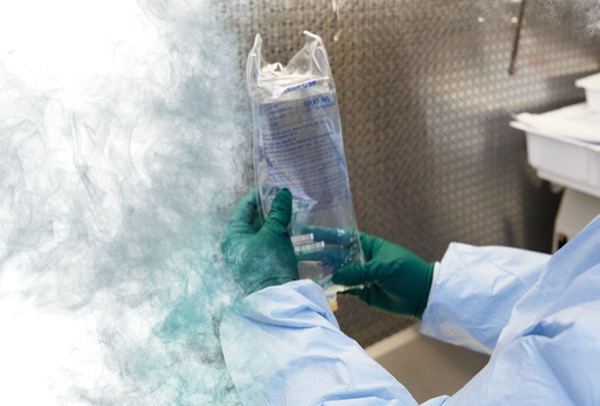
Dr. Mays listed some of the recent shortages at his medical center, including amino acid solutions, automated compounding device (ACD) disposables, potassium chloride, injectable multivitamins and sporadic shortages of electrolytes “all the time.”
Developing a contingency plan to react swiftly to supply disruptions was key to the hospital’s overall strategy. It included a monitoring system to detect early shortage warnings, such as a factory closing or a suddenly unavailable active pharmaceutical ingredient, and to alert everyone with a stake in nutrition support and PN product supply.
“We have a biweekly drug shortage meeting,” Dr. Mays said, “that includes somebody from each area of our hospital—adult, pediatric, critical care, leadership, management and purchasing.” Dr. Mays’ role, he added, is to inform the group what’s needed to provide patient care “so that we can all be on the same page in figuring out who needs these medications that have been impacted.”
How has the medical center navigated shortages? One way has been to review alternative solutions that would fit the needs of its PN patient population. Outsourcing PN to a compounding facility was considered and rejected because “it was just not a good fit for us,” Dr. Mays said. Instead, “we looked at multi-chamber bag parenteral nutrition [MCB-PN].” The team needed an MCB-PN product that would meet the PN requirements of adult patients and also address clinicians’ safety concerns.
After an intensive evaluation of available products, the medical center rolled out MCB-PN for non-critical adult PN patients. But as the shortages of potassium chloride and ACD disposables worsened, Dr. Mays said, “we went house-wide with multi-chamber bags in the adult hospital and then reviewed our processes a few months later to make sure everything was safe.” Ensuring that the electronic health record build worked correctly also was key, he said.
#Starvethebabies Tweet Helps Relieve One Shortage
For neonatal and pediatric patients, PN shortages can be perilous, noted Mary Petrea Cober, PharmD, BCNSP, BCPPS, FASPEN, a clinical pharmacy specialist in the neonatal ICU at Akron Children’s Hospital and a professor at Northeast Ohio Medical University, in Rootstown. “These smaller patients have a lack of body stores and a continued need for growth and development,” Dr. Cober said. “So they are at higher risk for nutritional deficiencies. When a manufacturer says you’re only getting 50% of your allocation, who are you going to cut out?”
Dr. Cober recalled the injectable lipid emulsion (ILE) shortage several years ago when she went to the neonatal unit and said, “We’re going to open two bags of fat today. Which babies would you like to feed? It was horrible.”
Then, she said, a neonatologist stepped in and announced, “We’re going to go on Twitter” with the hashtag #starvethebabies. Dr. Cober later talked to the manufacturer, saying, “I’m not trying to feed some adult patients. I’m just trying to feed all these little guys.” The next thing she knew, she said, there was an extra case of ILEs on her doorstep. “Sometimes you have to fight for your patients.”
Dr. Cober offered some key takeaway points:
- Shortages are far from ideal, but sometimes we have to make do with the options we have.
- Reserve pediatric multivitamins for neonatal patients due to toxicity concerns.
- Calcium and phosphate salts, and L-cysteine, affect calcium/phosphate solubility, so know the impact of using different products.
- Reserve ILEs for pediatric patients, especially neonates, but consider alternatives to usual products.
- Consult ASPEN recommendations for actions to take during shortages.
Finally, when shortages resolve, she said, return to normal practice standards. “Don’t keep living in ‘Shortage Land’” because it saves money or is easier. “Unfortunately,” Dr. Cober said, “a lot of people trained in the last 10 years don’t know what normal is because they’ve always lived in abnormal [times].”
Home Feeding Presents Unique Challenges

Patients who transition to nutrition support care at home have a very different set of challenges, according to Jessica Monczka, RD, LD, CNSC, a clinical nutrition director for Option Care Health. “A lot of these patients are very stable,” Ms. Monczka said. “Many of them haven’t had a change to their orders in months. They have infrequent labs.”
This consistency allows clinicians to spend more time with high-touch patients, she noted. “But throw a shortage into the mix,” she continued, “and every single one of those stable patients goes over to the high-touch pile. They all need new orders.”
But prescribers who are accustomed to their patients’ stable status often can be hard to reach, Ms. Monczka noted. So it can take a lot of effort to implement a shortage plan. “Then we have to teach these patients,” she added. “It’s not just a new bag coming up to the floor from the pharmacy and nurses administering it.”
Personalized PN bags that are prepared and shipped weekly to patients’ homes need additional nutrients, including vitamins, which patients are required to inject into their bag each day before starting the infusion. These additives may come in vials or syringes, and patients need to understand how this shortage regimen will differ from the process they were trained on previously, Ms. Monczka pointed out.
In addition, she said, prescribers need to understand which products are available. Each additive will have different stability data, concentrations and dosage volumes, and ordering in a way that can be accurately dosed in the home is important. When PN regimens are adjusted because of a shortage, “we have to talk to these patients about what’s going on” and what they need to do, Ms. Monczka said.
The pressure on nutrition providers can be daunting. “Every clinician in this room is going to stay as long as it takes to make sure that every single patient gets taken care of, but when it’s shortage after shortage after shortage, it starts to take its toll,” Ms. Monczka said, “and that’s an important thing for us to consider in this conversation.”
Dr. Blackmer reported financial relationships with Neonatal Lexicomp and Wolters Kluwer. Dr. Cober reported relationships with Baxter, B. Braun/CAPS, Fresenius Kabi and Wolters Kluwer. Dr. Mays reported relationships with Baxter and Fresenius Kabi. Ms. Monczka reported a relationship with Fresenius Kabi.
Please log in to post a comment